

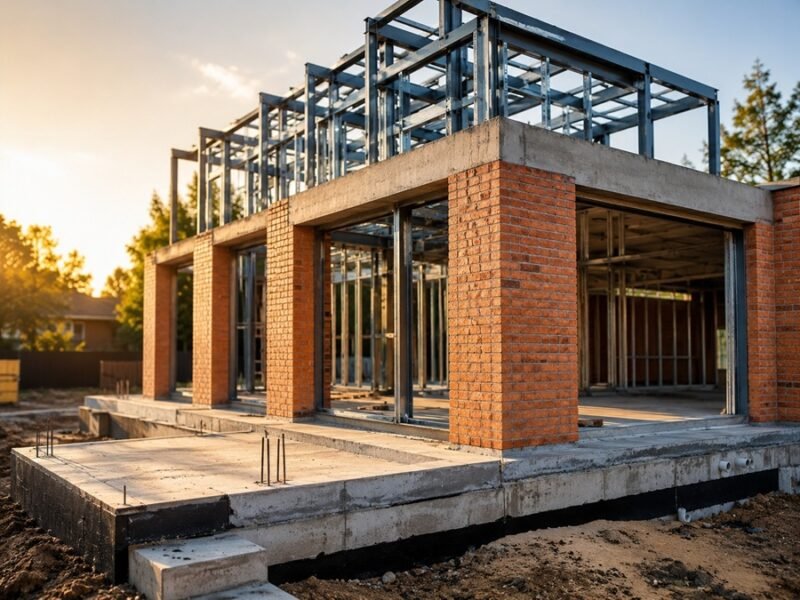
Every building tells a story — and the materials used to construct it are the first chapter. Whether you are planning a family home, a commercial complex, or a simple renovation, choosing the right building materials is one of the most important decisions you will make.
Poor material choices lead to structural failures, sky-high maintenance bills, safety hazards, and buildings that simply do not last. The right choices, on the other hand, deliver decades of performance, lower upkeep costs, and peace of mind.
This guide breaks down everything you need to know about selecting construction materials — from durability and climate considerations to cost comparisons and future trends. Whether you are a homeowner, contractor, architect, or property investor, this is your practical starting point.
To choose the right building materials, consider durability, climate conditions, load-bearing needs, fire and moisture resistance, maintenance costs, and sustainability. Concrete, brick, and steel are the most durable options. Always match materials to your local environment, budget, and structural requirements for the longest-lasting results.
Why Building Material Selection Matters
The choice of construction materials directly impacts the structural integrity, safety, energy efficiency, and lifespan of a building. It also affects your total cost of ownership — not just what you pay upfront, but what you spend over 20, 50, or even 100 years.
Consider this: a home built with properly selected materials in a coastal climate may stand for generations, while the same structure built with the wrong materials could begin deteriorating within a decade. Material selection is not just a technical decision — it is a long-term financial and safety commitment.
Key reasons why material selection matters:
- Structural safety and load-bearing capacity
- Resistance to local weather and climate conditions
- Fire resistance and life safety compliance
- Energy efficiency and insulation performance
- Long-term maintenance costs and ease of repair
- Environmental impact and sustainability
- Aesthetic appeal and resale value
Key Factors to Consider When Choosing Building Materials
1. Durability
Durable building materials resist wear, cracking, warping, and decay over time. Concrete, brick, and stone are among the most durable options. Always ask: how will this material perform in 25, 50, or 100 years?
2. Structural Strength
Different structures require different load-bearing capacities. Steel and reinforced concrete excel at handling heavy structural loads. Wood works well for lighter residential framing but has limits under heavy commercial use.
3. Weather and Climate Resistance
Weather-resistant materials are essential for longevity. Consider wind, rain, UV exposure, humidity, freeze-thaw cycles, and temperature extremes when choosing materials. What works in Arizona may fail in Alaska.
4. Fire Resistance
Fire-rated materials can slow the spread of fire, protect occupants, and limit property damage. Concrete, brick, and steel have inherently high fire resistance. Wood, while versatile, requires treatment to meet fire codes.
5. Moisture Resistance
Moisture is one of the leading causes of building damage. In high-humidity or rainy climates, materials such as concrete, treated steel, and engineered composites significantly outperform untreated wood or standard drywall.
6. Maintenance Requirements
Low-maintenance materials save money over time. Stone, brick, and fiber cement siding, for example, require minimal upkeep compared to painted wood or standard vinyl. Factor in lifetime maintenance costs, not just installation cost.
7. Energy Efficiency
Energy-efficient materials reduce heating and cooling loads and improve occupant comfort. Insulated concrete forms (ICF), structural insulated panels (SIP), and thermally broken steel systems all contribute to lower energy bills.
8. Sustainability
Sustainable materials reduce environmental impact. Recycled steel, sustainably sourced timber, bamboo, and reclaimed brick all score well for eco-friendly construction. Green building certifications like LEED reward sustainable material choices.
9. Cost vs Long-Term Value
The cheapest material upfront is rarely the most economical over a building’s lifetime. Calculate total cost of ownership — including installation, maintenance, repairs, and eventual replacement — before making a final decision.
Must Read: Why 2026 Is Still a Strong Year to Invest in US Residential Real Estate
Common Types of Building Materials and Their Benefits
Concrete
Advantages:
- Exceptional compressive strength and load-bearing capacity
- Fire resistant and pest resistant
- Long lifespan — 50 to 100+ years with proper care
- Versatile — can be poured into virtually any shape
- Low maintenance once cured
Limitations:
- High carbon footprint in production
- Cracks under tension without reinforcement
- Heavy — requires strong foundations
Best Uses:
- Foundations, slabs, retaining walls, commercial buildings, bridges
Brick
Advantages:
- Extremely long lifespan — 100 to 200+ years
- Excellent thermal mass — keeps buildings cool in summer, warm in winter
- Low maintenance with high aesthetic appeal
- Strong fire resistance rating
Limitations:
- Higher labor costs for installation
- Heavy — requires sturdy structural support
- Limited design flexibility compared to modern materials
Best Uses:
- Exterior walls, facades, landscaping features, heritage buildings
Steel
Advantages:
- Unmatched tensile strength for spanning large distances
- 100% recyclable — very sustainable option
- Fast construction timelines
- Consistent quality with prefabrication
Limitations:
- Susceptible to corrosion without proper coating
- Conducts heat — needs thermal breaks for energy efficiency
- High upfront material cost
Best Uses:
- Commercial high-rises, industrial warehouses, bridges, roofing frames
Wood
Advantages:
- Renewable and biodegradable — excellent sustainability profile
- Natural insulator — good thermal and acoustic performance
- Easy to work with — lower labor costs
- Warm, natural aesthetic that is highly desirable
Limitations:
- Vulnerable to moisture, pests, mold, and rot
- Requires ongoing maintenance (painting, sealing, treating)
- Fire risk without treatment
Best Uses:
- Residential framing, interior finishes, flooring, roofing structures
Stone
Advantages:
- The longest-lasting building material — some structures stand for millennia
- Minimal maintenance required
- Excellent thermal mass and natural insulation
- High-end aesthetic with timeless appeal
Limitations:
- Very high cost for quarrying, transport, and skilled labor
- Heavy weight demands substantial structural support
- Limited availability of specific stone types by region
Best Uses:
- Foundations, accent walls, luxury facades, historic restorations
Glass
Advantages:
- Maximizes natural daylighting — reduces artificial lighting costs
- Modern aesthetic that enhances commercial properties
- Double and triple glazing offers strong thermal insulation
Limitations:
- Fragile compared to other structural materials
- Privacy concerns without tinting or frosting
- High-performance glazing comes at significant cost
Best Uses:
- Curtain walls, windows, skylights, commercial facades
Modern Composite Materials
Advantages:
- Engineered for specific performance requirements
- Often lighter than traditional materials with comparable strength
- Low maintenance and high resistance to rot, pests, and UV
Limitations:
- Newer materials lack decades of real-world performance data
- Often higher upfront cost than traditional alternatives
Best Uses:
- Decking, cladding, roofing panels, facades, and structural insulated panels
How Climate Affects Material Selection
Climate is one of the most critical factors in choosing construction materials. A material that performs beautifully in one region can fail in another. Here is how to match materials to climate:
Hot Climates (e.g., desert, tropical):
Use high thermal-mass materials like brick, concrete, and stone that absorb heat during the day and release it slowly at night. Light-colored or reflective finishes help reduce heat absorption.
Cold Climates (e.g., northern regions, highlands):
Insulated concrete forms (ICF), structural insulated panels (SIP), and thermally broken steel frames prevent heat loss. Avoid materials that crack during freeze-thaw cycles.
Coastal Regions (salt air and humidity):
Corrosion-resistant materials are essential. Stainless steel, fiber cement, concrete, and treated composites perform best. Standard steel and untreated wood degrade rapidly in salt air.
High Rainfall Areas:
Moisture-resistant materials such as concrete, brick with proper mortar, and composite cladding are preferred. Drainage design is equally important. Waterproofing membranes are non-negotiable.
Earthquake-Prone Zones:
Flexible materials that absorb seismic energy without catastrophic failure are preferred. Reinforced concrete and steel-frame construction with proper seismic detailing perform well. Heavy unreinforced masonry is high risk.
Comparing Popular Building Materials
Use this comparison table as a quick reference guide when evaluating your material options:
| Material | Durability | Cost | Maintenance | Lifespan | Sustainability | Strength |
| Concrete | Very High | Medium | Low | 50–100+ yrs | Moderate | Excellent |
| Brick | High | Medium–High | Very Low | 100–200 yrs | High | High |
| Steel | Very High | High | Moderate | 50–100 yrs | High (recycl.) | Excellent |
| Wood | Medium | Low–Medium | High | 20–100 yrs | Very High | Moderate |
| Stone | Excellent | Very High | Minimal | 500+ yrs | High | Very High |
| Glass | Medium | High | Moderate | 20–50 yrs | Moderate | Low (alone) |
| Composites | High | Medium–High | Low | 30–75 yrs | Varies | High |
Best Building Materials for Residential Construction
For homes, the goal is a balance between durability, comfort, aesthetics, and cost. Here are the top recommendations:
- Foundations: Reinforced concrete — strong, moisture resistant, and code-compliant universally
- Framing: Engineered wood or light-gauge steel — consistent dimensions, lower waste
- Exterior Walls: Brick, fiber cement siding, or insulated concrete — low maintenance and weather-tight
- Roofing: Metal roofing, concrete tiles, or asphalt shingles — matched to climate and budget
- Interior Walls: Drywall with proper moisture barriers in wet areas; cement board in bathrooms
- Flooring: Porcelain tile, engineered hardwood, or polished concrete — each balances durability and aesthetics
For most residential projects, a combination of reinforced concrete foundations, engineered wood or steel framing, and brick or fiber cement exteriors delivers the best long-term performance at a reasonable cost.
Best Building Materials for Commercial Buildings
Commercial buildings demand higher load capacities, fire resistance, and larger spans than residential construction. Key material recommendations:
- Structural Frame: Structural steel or reinforced concrete — both handle large spans and heavy loads
- Exterior Facade: High-performance glass curtain walls, precast concrete panels, or aluminum composite panels
- Floor Systems: Post-tensioned concrete slabs for large floor plates
- Roofing: Single-ply membrane (TPO, EPDM) or metal standing seam for flat or low-slope roofs
- Interior: Steel stud framing with acoustic insulation, commercial-grade flooring (polished concrete, luxury vinyl tile)
Sustainable and Eco-Friendly Building Material Options
Sustainable construction is no longer a niche preference — it is a mainstream priority. Here are the top eco-friendly options gaining traction:
- Recycled Steel: 100% recyclable and already widely recycled — one of the greenest structural choices
- Sustainably Certified Timber (FSC): Responsibly harvested wood that stores carbon throughout its life
- Bamboo: One of the fastest-growing plant materials on earth with surprisingly high tensile strength
- Hempcrete: Lightweight, carbon-sequestering, and excellent insulation properties — ideal for low-rise construction
- Reclaimed Brick and Stone: Reusing existing materials reduces embodied carbon dramatically
- Mycelium Composites: Experimental but promising — grown from fungal networks as a zero-waste alternative
Targeting green building certifications such as LEED, BREEAM, or Green Star can guide your material selection and significantly improve property value and market appeal.
Common Mistakes to Avoid When Selecting Construction Materials
- Choosing on price alone: The cheapest option upfront is often the most expensive over time. Always calculate lifetime cost of ownership.
- Ignoring local climate: Materials that work in one region can fail rapidly in another. Match material properties to your specific environment.
- Overlooking maintenance requirements: Some materials require constant upkeep. Factor in annual maintenance costs before selecting.
- Neglecting fire and safety codes: Always verify that chosen materials meet local building codes and fire resistance standards.
- Underestimating moisture risks: Moisture infiltration is the leading cause of early building deterioration. Select materials and details that keep water out.
- Skipping professional structural assessment: Never select structural materials without input from a licensed structural engineer.
- Following trends over function: A trendy material that lacks track record in your climate can be a costly experiment.
Expert Tips for Building a Long-Lasting Structure
Drawing on industry best practices and real-world construction experience, here are actionable insights:
- Always engage a licensed structural engineer early in the design process — not after materials are selected.
- Request material test data and certifications from suppliers, not just marketing brochures.
- Specify materials with proven performance records in your local climate — ask local builders what lasts.
- Design for ease of maintenance: accessible roof drains, replaceable facade panels, inspectable foundations.
- Invest in waterproofing — it is the least visible but most important layer of any structure.
- Build in thermal breaks and continuous insulation layers to meet modern energy performance standards.
- Use quality fasteners, anchors, and connectors — many failures originate at connections, not materials themselves.
- Inspect and document material deliveries to confirm specification compliance before installation begins.
Future Trends in Building Materials
The construction industry is evolving rapidly. Here are the material innovations shaping the next decade:
- Mass Timber (CLT and Glulam): Cross-laminated timber is emerging as a credible structural alternative to concrete and steel for mid-rise buildings — with a dramatically lower carbon footprint.
- Self-Healing Concrete: Concrete embedded with bacteria or mineral agents that automatically seal cracks, extending service life and reducing maintenance costs.
- Aerogel Insulation: Ultra-thin insulation panels with extraordinary thermal resistance — enabling high-performance building envelopes without bulk.
- Phase-Change Materials (PCM): Building materials that absorb and release heat at specific temperatures, passively regulating indoor climate.
- 3D-Printed Construction Materials: On-site or factory-printed concrete and composite elements reducing labor costs and material waste.
- Carbon-Negative Materials: Materials engineered to absorb more CO2 during production than they emit — a frontier goal for the sustainable construction sector.
Conclusion
Choosing the right building materials is not a one-size-fits-all exercise. It requires a clear understanding of your climate, budget, structural requirements, aesthetic goals, and long-term maintenance expectations.
Concrete, brick, and steel have proven their durability over centuries of construction. Wood and glass bring warmth and light. Modern composites and sustainable alternatives are expanding the options available to today’s builders and designers.
The best material decision is an informed one — made with professional guidance, solid data, and a long-term view. Invest time in the selection process now, and your structure will reward you with decades of reliable, low-maintenance performance.
Key Takeaways
- Match materials to your local climate conditions — this is the single most important factor.
- Calculate total cost of ownership, not just upfront material cost.
- Concrete, brick, and steel offer the highest durability for most structural applications.
- Stone has the longest natural lifespan of any common building material.
- Sustainable materials like recycled steel and mass timber are increasingly cost-competitive.
- Always work with a licensed structural engineer for structural material decisions.
- Waterproofing and moisture management protect your investment more than almost any other decision.
- Building codes exist for good reason — never select materials that do not meet local fire, structural, and energy standards.
Frequently Asked Questions
Q1: What are the most durable building materials?
Stone is the most durable naturally occurring building material, with structures lasting thousands of years. Reinforced concrete and structural steel are the most durable engineered options for modern construction, both capable of 50–100+ year service lives when properly designed and maintained.
Q2: How do you choose construction materials?
Consider these factors in order: local climate, structural requirements, fire and safety codes, budget (including lifetime costs), sustainability goals, and aesthetic preferences. Always consult a licensed structural engineer before finalizing structural material choices.
Q3: Which building materials last the longest?
Stone lasts the longest — thousands of years in many cases. Fired brick and concrete can last 100–200+ years. Steel, properly protected from corrosion, achieves 50–100 years of reliable service. Wood has the shortest natural lifespan without ongoing treatment.
Q4: What factors affect material durability?
The main factors are: exposure to moisture, UV radiation, temperature extremes, chemical exposure, structural loading patterns, material quality, installation quality, and ongoing maintenance. Climate is often the most decisive single factor.
Q5: How does climate influence material selection?
Climate determines which materials will perform reliably over time. Hot climates favor high thermal-mass materials. Cold climates require excellent insulation. Coastal environments demand corrosion resistance. High-rainfall zones need strong moisture management. Earthquake zones require flexible, ductile structural systems.
Q6: What are the best materials for residential construction?
For most climates, the best combination is reinforced concrete foundations, engineered wood or steel framing, brick or fiber cement exterior cladding, and metal or concrete tile roofing. Interior finishes depend on room use and personal preference.
Q7: How can quality materials reduce maintenance costs?
High-quality materials with proven durability reduce the frequency of repairs, replacements, and inspections over a building’s lifetime. A slightly higher upfront investment in materials like brick, concrete, or composite cladding can save substantially on maintenance bills over 20–50 years.
Q8: What is the most eco-friendly building material?
Sustainably certified timber (FSC-certified) is among the most eco-friendly structural materials — it stores carbon, is biodegradable, and comes from renewable sources. Recycled steel is also highly sustainable as it avoids the energy cost of virgin steel production.
Q9: Is concrete or brick better for a house?
Both are excellent choices. Concrete offers superior compressive strength and is ideal for foundations and structural elements. Brick provides excellent thermal mass, longevity, and low maintenance for exterior walls. Many high-performance homes use both — concrete structure with brick exterior cladding.
Q10: What is the cheapest long-lasting building material?
For most residential projects, concrete block and standard brick offer the best combination of longevity and affordability. Reinforced concrete is cost-effective for foundations. Engineered wood products (LVL, OSB) provide budget-friendly framing with good structural performance.
This article is intended for informational purposes. Always consult licensed engineers, architects, and local authorities before making structural decisions for any construction project.
