

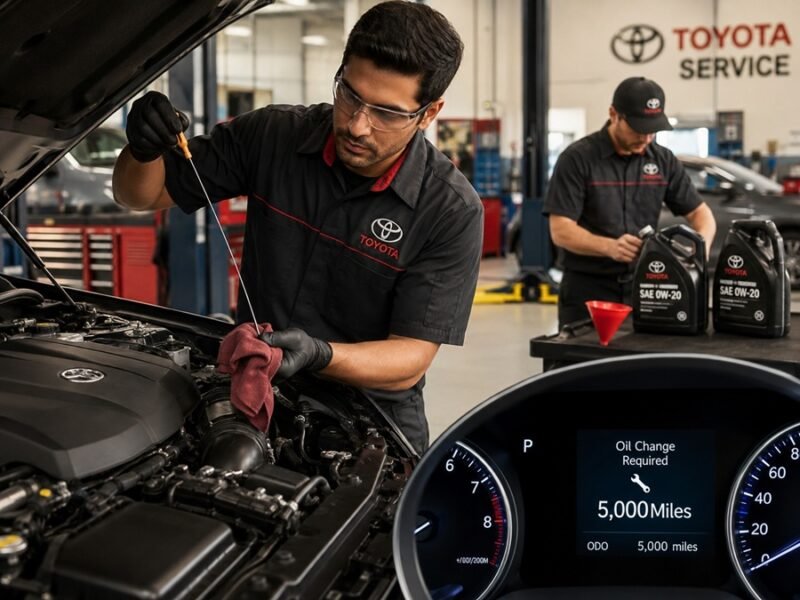
One of the most common car maintenance questions — and honestly, one of the most misunderstood — is how often should you change your engine oil?
If you grew up hearing “every 3,000 miles, no exceptions,” you’re not alone. But that rule? It’s largely outdated. Modern engines, better oil formulations, and smarter onboard monitoring systems have changed the game completely.
The truth is, most cars today need an oil change every 5,000 to 10,000 kilometres — and some synthetic-oil vehicles can go even longer. But the right interval for your car depends on several factors, and getting it wrong in either direction can cost you.
Most cars need an oil change every 5,000 to 10,000 kilometres, depending on oil type and driving conditions. Full synthetic oil can last 10,000–15,000 km per change, while conventional oil needs replacing every 5,000–7,500 km. Always consult your vehicle’s owner’s manual for the most accurate interval.
Let’s get into it.
How Often Should You Change Your Engine Oil?
There’s no single answer that fits every car. Here’s a general breakdown based on oil type:
| Oil Type | Recommended Interval |
|---|---|
| Conventional oil | Every 5,000–7,500 km |
| Full synthetic oil | Every 10,000–15,000 km |
| Synthetic blend | Every 7,500–10,000 km |
| High-mileage oil | Every 5,000–7,500 km |
The most reliable guide, though, is your owner’s manual. Manufacturers test their recommendations specifically for your engine’s design, tolerances, and operating conditions. If the manual says every 10,000 km with synthetic oil — trust that over any general rule.
Many newer cars also come with an oil life monitoring system that calculates your actual driving patterns — not just distance — and tells you exactly when to change the oil. If your car has this feature, use it.
Recommended Oil Change Intervals by Vehicle Type
Not all vehicles are created equal when it comes to oil change schedules. Here’s what to expect across common vehicle types:
Passenger Cars (Standard Petrol/Diesel)
Most everyday sedans and hatchbacks using synthetic oil are fine at every 10,000 km or once a year, whichever comes first. Cars on conventional oil should stick to every 5,000–7,500 km.
SUVs and Crossovers
Similar to passenger cars, but if your SUV is used for towing or off-road driving, treat it like a “severe duty” vehicle and shorten the interval to every 5,000–7,500 km regardless of oil type.
Trucks and Commercial Vehicles
Heavy-duty use means more heat and stress on the oil. Plan for every 5,000 km with conventional oil, or follow the manufacturer’s severe-use schedule.
Performance and Sports Cars
High-revving engines can degrade oil faster. Many manufacturers specify every 8,000–10,000 km with full synthetic — but always check the manual.
Older Vehicles (10+ Years)
Older engines with more wear benefit from high-mileage oil, typically changed every 5,000–7,500 km. This formulation includes seal conditioners that help reduce minor leaks common in ageing engines.
Synthetic vs Conventional Oil Change Frequency
This is where a lot of car owners get confused — so let’s clear it up simply.
Conventional oil is derived directly from crude oil with minimal processing. It breaks down faster under heat and stress, which is why it needs changing more frequently — roughly every 5,000 to 7,500 km.
Full synthetic oil is engineered in a lab to be more stable, resist breakdown, and protect better across extreme temperatures. It lasts significantly longer — typically 10,000 to 15,000 km per change.
Synthetic blend splits the difference. It’s a mix of conventional and synthetic base oils, offering better performance than conventional at a lower cost than full synthetic. Change interval: every 7,500–10,000 km.
Is synthetic always better? For most modern vehicles, yes. It provides superior engine protection, especially in stop-and-go traffic, extreme heat, and cold starts — all common conditions in India. The higher upfront cost is offset by longer intervals and better engine longevity.
Signs Your Car Needs an Oil Change
Even if you track your mileage carefully, your car will sometimes tell you it needs fresh oil before the scheduled interval. Watch for these warning signs:
- Oil change warning light on the dashboard — don’t ignore this, even briefly
- Engine knocking or ticking — a sign that oil isn’t lubricating internal parts properly
- Dark, black oil on the dipstick — fresh oil is light amber; black and gritty means it’s overdue
- Burning smell in the cabin — could be oil leaking onto hot engine components
- Increased exhaust smoke — sometimes indicates oil is burning inside the engine
- Sluggish performance or rough idling — degraded oil causes more friction, reducing efficiency
If you notice any of these between your scheduled intervals, get the oil checked right away — don’t wait for the mileage marker.
What Happens If You Delay an Oil Change?
Skipping or pushing past your oil change schedule isn’t just a minor inconvenience — it can cause serious, expensive damage over time.
Here’s what happens when old oil stays in the engine too long:
- Oxidation and sludge buildup — Oil breaks down and turns into a thick, tar-like sludge that clogs oil passages and starves engine components of lubrication
- Increased engine wear — Metal parts grind against each other without adequate oil film, accelerating wear on pistons, camshafts, and bearings
- Overheating — Degraded oil loses its ability to carry heat away from engine components
- Reduced fuel efficiency — A poorly lubricated engine works harder and burns more fuel
- Engine failure — In extreme cases, prolonged neglect can cause irreversible engine damage requiring a full replacement
The cost of an oil change is a fraction of the cost of engine repairs. Staying on schedule is genuinely one of the best investments you can make in your car’s lifespan.
And if you’re also wondering how long does an oil change take — most professional services are done in 20 to 45 minutes, which makes it one of the easiest maintenance tasks to stay on top of.
How Driving Habits Affect Oil Life
Here’s something the mileage-only approach misses: how you drive matters as much as how far you drive.
Manufacturers often define two types of driving conditions:
Normal Driving
- Mostly highway or steady-speed driving
- Moderate temperatures
- Minimal stop-and-go traffic
Under these conditions, you can comfortably stretch to the longer end of your oil change interval.
Severe Driving Conditions
- Frequent short trips under 8 km (engine never fully warms up)
- Heavy city traffic with constant stopping and starting
- Towing, hauling, or off-road driving
- Extreme heat or dusty environments
- Taxi, delivery, or rideshare use
If your day-to-day driving fits the “severe” category — which honestly describes most urban drivers in India — consider changing your oil more frequently, regardless of what the mileage interval says. Your engine is working harder, and your oil is degrading faster.
Oil Change Myths You Should Stop Believing
There’s a lot of outdated advice floating around about engine oil. Let’s set the record straight:
Myth 1: “Change your oil every 3,000 km, always.” This was relevant decades ago for older engines using conventional oil. Modern synthetic oils and improved engine tolerances have made this rule obsolete for most cars.
Myth 2: “Dark oil always means bad oil.” Oil naturally darkens as it does its job — picking up combustion byproducts and tiny contaminants. Dark colour alone doesn’t mean it needs changing. Check consistency on the dipstick and follow your interval.
Myth 3: “You can’t switch from conventional to synthetic mid-life.” You absolutely can. Modern synthetic oils are fully compatible with conventional oil and can be switched at any regular oil change interval.
Myth 4: “More oil is better.” Overfilling is actually harmful. Too much oil causes it to foam, which reduces lubrication. Always fill to the mark on the dipstick — not above it.
Myth 5: “New cars don’t need oil changes for a year.” Even with extended synthetic oil intervals, the first oil change on a new car should happen within the manufacturer’s recommended window. Check the manual — some specify 1,000 km for the first break-in change.
Tips to Extend Engine Oil Life
Want to get the most out of every oil fill? Here are simple habits that genuinely help:
- Warm up your engine briefly before driving hard — cold starts are tough on oil
- Avoid aggressive acceleration and braking — smooth driving keeps engine temperatures stable
- Check your oil level monthly — low oil causes rapid degradation in what remains
- Use the recommended oil grade — thinner or thicker than specified puts unnecessary stress on the oil film
- Replace the oil filter every time — a clogged filter reduces oil flow and negates the benefit of fresh oil
- Keep up with air filter changes — a dirty air filter increases contaminants reaching the oil
- Park in shade where possible — excessive heat exposure between drives accelerates oxidation
These aren’t dramatic changes, but over time they genuinely add up to a longer engine life and fewer unplanned repair bills.
Frequently Asked Questions
Is it okay to change engine oil once a year even if I drive less?
Yes — time matters as much as mileage. Even if you drive under 5,000 km a year, change your oil at least once every 12 months. Oil degrades through oxidation over time, regardless of how often the car moves.
How many kilometres can I go over my oil change interval?
Occasionally going 500–1,000 km over your interval is unlikely to cause immediate damage, especially with synthetic oil. But making a habit of it accelerates engine wear. Try not to push past 10–15% over your recommended interval.
Does engine oil expire in the bottle before being used?
Yes. Unopened engine oil typically has a shelf life of 5 years from the manufacture date. After that, the additives degrade and the oil may not perform as specified. Check the bottle for an expiry or manufacture date.
Can I check if my oil needs changing without going to a shop?
Absolutely. Pull out the dipstick, wipe it clean, reinsert it fully, then pull it out again. Check the level against the min/max marks, and rub a bit between your fingers — gritty, black, or milky oil needs attention. Clean, amber-coloured oil is fine.
Does synthetic oil really last longer, or is it just marketing?
It’s backed by engineering, not just marketing. Synthetic oil molecules are more uniform in size and more stable under heat and pressure, which is why they resist breakdown longer. Independent testing and OEM recommendations consistently support extended synthetic intervals.
Conclusion
So, how often should you change your engine oil? For most modern cars using full synthetic oil, every 10,000–15,000 km is perfectly reasonable. If you’re on conventional oil or drive under tough city conditions, aim for every 5,000–7,500 km.
The golden rule: check your owner’s manual first, then adjust for how you actually drive.
Regular oil changes are genuinely the cheapest form of engine insurance available. A few hundred rupees every few months is nothing compared to the cost of a seized engine or early wear on critical components.
Stay consistent, keep an eye on your dipstick, and your car will reward you with years of reliable service. And if you’ve been curious about how long oil changes take, the good news is most services are done in under 45 minutes — there’s really no reason to keep putting it off.
