

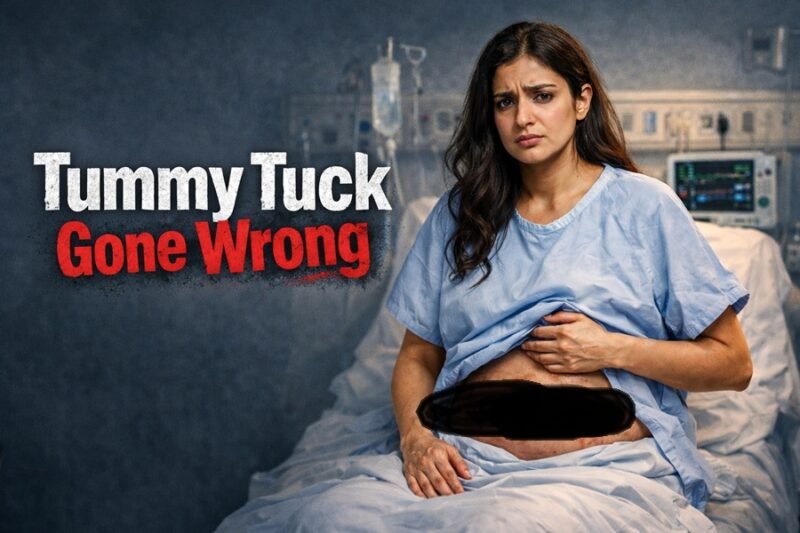
A tummy tuck—or abdominoplasty—can be life-changing. For many patients, it marks the end of a long journey with loose skin, weakened muscles, or stubborn fat that diet and exercise simply couldn’t fix. But when a tummy tuck goes wrong, the emotional fallout can be just as heavy as the physical discomfort.
If you’re reading this, you’re probably worried. Maybe your results don’t look the way you expected. Maybe you’re deep in recovery and something feels off. Whatever brought you here, know this: you’re not alone, and in most cases, there are real solutions available.
This guide walks you through the seven most common signs of a failed abdominoplasty, how to tell the difference between normal healing and a genuine complication, and what your options look like going forward.
Disclaimer: This article is for informational purposes only. If you are experiencing pain, fever, or any urgent symptoms, consult a medical professional immediately.
How to Spot a Tummy Tuck Gone Wrong: 7 Common Signs
1. Lopsided or Uneven Contours
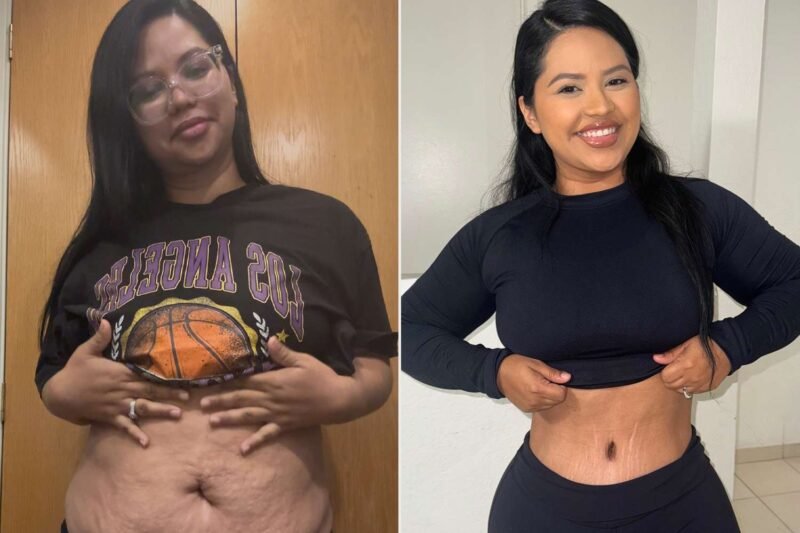
One of the most visible signs of a poor outcome is asymmetry—one side of the abdomen appears higher, flatter, or more contoured than the other. You might also notice irregular lumps or bumps beneath the skin. These can result from uneven fat removal, poor wound closure, or internal scar tissue forming in an irregular pattern.
Minor unevenness in the first few months is normal. But if the asymmetry is still pronounced after six months, it warrants a closer look.
2. Misaligned or “Unnatural” Belly Button
The belly button is one of the most technically demanding parts of a tummy tuck. A well-executed umbilicoplasty should result in a natural-looking navel that sits symmetrically on the abdomen. A bad tummy tuck belly button, by contrast, may appear too high, too low, off-center, pinched, or overly round.
This is one of the most searched concerns among patients post-surgery—and understandably so. The belly button is highly visible, and an unnatural result can undermine an otherwise successful procedure.
3. High or Thickened Scars
Tummy tuck scars should sit low on the abdomen, ideally hidden beneath a swimsuit or underwear line. When scarring goes wrong, the incision line may sit unusually high, making it difficult to conceal. In some cases, patients develop keloids—thick, raised, rope-like scars that extend beyond the original incision site—or hypertrophic scars, which are raised but stay within the wound boundary.
If you’re trying to identify what pictures of tummy tucks gone wrong tend to show, abnormal scarring is one of the most common visual findings.
4. Muscle Repair Failure
Many abdominoplasty procedures include diastasis recti repair—stitching the abdominal muscles back together along the midline. When this repair fails or breaks down, patients experience what’s called “midline bulging”: a visible ridge or protrusion running vertically down the center of the abdomen, even after the swelling subsides.
Tummy tuck muscle repair failure is more likely in patients who returned to strenuous activity too soon, experienced a significant post-op infection, or were not good candidates for the repair to begin with.
5. Skin or Tissue Necrosis
This is the most critical safety concern on this list. Necrosis refers to the death of skin or tissue due to inadequate blood supply. Early signs include skin that appears dusky, purple, or unusually dark in patches. Over time, the tissue may turn black and begin to break down.
Risk factors include smoking, poor circulation, diabetes, and tension placed on wound edges during closure. If you notice any skin darkening or discoloration that wasn’t there before, contact your surgeon immediately. This is not a “wait and see” situation.
6. Persistent Seromas or Fluid Pockets
A seroma is a pocket of fluid that collects beneath the skin after surgery. Some fluid accumulation in the first few weeks is expected. However, seromas that persist beyond this window, keep returning after drainage, or feel firm and increasingly uncomfortable may indicate a deeper problem with how the tissue is healing.
Untreated seromas can harden into a condition called a “chronic seroma” or lead to infection, further complicating recovery.
7. “Dog Ears” at Incision Ends
“Dog ears” are small puckers or folds of excess skin that form at the ends of the incision line. They’re one of the more common cosmetic complaints after a tummy tuck and are usually correctable with a minor in-office procedure. While not dangerous, they can be frustrating—especially after investing in surgery for a smooth result.
Understanding the Difference: Normal Recovery vs. Botched Result
Not every concern in the weeks after surgery signals a failed abdominoplasty. The body heals in stages, and some of what patients see early on is simply part of that process.
Swelling, for example, can make the abdomen appear lumpy, uneven, or swollen for months. The scar will go through phases—initially red and raised, then fading over 12–18 months. Numbness, tightness, and firmness in the tissue are all expected, particularly in the first three months.
A general rule: give your body at least six months before drawing conclusions about your final result. If something still looks or feels wrong after that window, it’s worth seeking a second opinion.
Recovery Red Flags: When to Act Fast
Some symptoms need immediate attention. Others can wait for your next scheduled follow-up. Here’s a quick breakdown:
| Symptom | Action Needed |
| Chest pain or difficulty breathing | Call emergency services immediately (potential blood clot) |
| High fever (over 101°F) or foul-smelling discharge | See a doctor urgently (signs of infection) |
| Darkening or blackened skin around the incision | Contact your surgeon immediately (possible necrosis) |
| Lopsided shape or asymmetry | Wait 6–12 months, then consider revision |
| High or misplaced scar | Wait 12–18 months before revision surgery |
| Dog ears or minor puckering | Discuss minor correction after full healing |
Tummy Tuck Revision: How to Fix a Failed Procedure
The most important thing to understand about a bad tummy tuck result is this: most issues are correctable.
Non-surgical options are often the first step for cosmetic concerns. Laser therapy can improve the texture and appearance of hypertrophic scars. Steroid injections can help flatten keloids. Radiofrequency treatments may address mild skin laxity or irregularity.
Surgical revision becomes necessary for structural issues—muscle repair failure, significant asymmetry, a mispositioned belly button, or excess skin that non-surgical methods can’t address. Tummy tuck revision surgery is typically more complex than the original procedure, because it involves working around existing scar tissue and altered anatomy. For this reason, choosing a board-certified plastic surgeon with specific experience in revision abdominoplasty is essential.
The timing matters, too. Most surgeons recommend waiting at least 12 months after your original procedure before pursuing a revision, allowing all swelling to resolve and tissues to fully mature.
Finding Your Path Forward
A tummy tuck gone wrong is not the end of your story. With the right diagnosis, the right surgeon, and a clear understanding of your options, most patients are able to achieve significant improvement—sometimes even better results than the original procedure offered.
If something about your recovery doesn’t feel right, trust that instinct. Seek a second opinion from a board-certified plastic surgeon who has experience with failed abdominoplasty cases. Bring photos, ask detailed questions, and don’t rush into revision surgery before you’re ready.
You deserved a good outcome from the start. With the right expertise, there’s still a real path to getting there.
Frequently Asked Questions
Can a botched tummy tuck be fixed?
In most cases, yes. The right course of action depends on the specific issue. Minor cosmetic concerns like dog ears or surface scarring can often be corrected with small procedures or laser treatments. More significant problems—such as muscle repair failure, a mispositioned belly button, or major asymmetry—may require revision surgery. A consultation with a board-certified plastic surgeon experienced in revision procedures is the best starting point.
What are the signs of tummy tuck muscle repair failure?
The most telling sign is a visible midline bulge—a ridge or protrusion running vertically down the center of the abdomen—that persists well after the normal swelling window has passed. You might also notice a lack of core stability, a “pooch” that returns despite a healthy weight, or discomfort in the abdominal wall. An ultrasound or physical examination by your surgeon can confirm whether the repair has broken down.
How long should I wait before tummy tuck revision surgery?
The general recommendation is at least 12 months from your original procedure, though many surgeons prefer to wait up to 18 months. This allows all post-operative swelling to fully resolve and the tissues to settle, giving both you and your surgeon a clearer picture of what actually needs to be corrected. Rushing into revision too early can make the outcome harder to predict and potentially more difficult to achieve.
Read Also: Newborn Baby Skin Care: A Gentle Guide to the Best Products and Routines
