

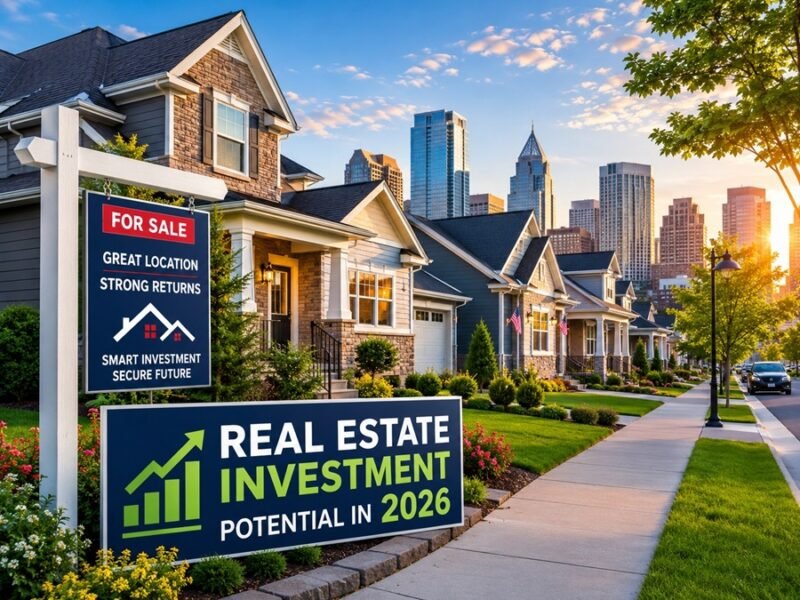
If you’ve been watching the housing market lately, you’ve probably heard the doubts. Mortgage rates are still elevated. Home prices remain high in many cities. Affordability is a challenge for average buyers. So why are experienced real estate investors still moving forward — confidently — in 2026?
The answer isn’t blind optimism. It’s strategy.
While the market looks complicated on the surface, the fundamentals that have made residential real estate one of America’s most reliable wealth-building tools are still firmly in place. In this article, we’ll break down exactly why 2026 remains a strong year to invest — and how smart investors are positioning themselves right now.
Quick Answer
Is 2026 a good year to invest in US residential real estate? Yes. Despite elevated mortgage rates, tight housing supply, strong rental demand, and real estate’s proven role as an inflation hedge make 2026 a solid year for residential property investment — especially for long-term, buy-and-hold investors focused on cash flow and appreciation.
Is 2026 a Good Year to Invest in US Residential Real Estate?
The short answer: yes — but with eyes wide open.
The US housing market in 2026 is not the frenzied, anything-goes market of 2020–2021. That era of ultra-low interest rates and pandemic-driven buying frenzy is behind us. Today’s market rewards disciplined investors who do their homework, understand local market dynamics, and think in terms of years — not months.
Historically, residential real estate has delivered consistent long-term returns. According to long-term housing data, US home prices have appreciated roughly 3–5% annually over the past several decades, outpacing inflation in most periods. Combine that with rental income, tax advantages, and leverage through financing, and real estate remains one of the most powerful wealth-building vehicles available.
Expert Perspective
Market analysts and seasoned investors consistently emphasize one thing: the best time to buy real estate is when others are hesitant. In 2026, with many first-time buyers on the sidelines due to rate concerns, competition for well-priced investment properties has eased in certain markets — creating opportunity for those ready to act.
1. Housing Supply Remains Tight in Many Markets
One of the most powerful forces supporting home values in 2026 is simple: there aren’t enough homes.
The US has been dealing with a structural housing shortage for years. The National Association of Realtors has estimated a multi-million unit deficit in housing inventory. New construction has not kept pace with population growth, partly due to labor shortages, rising material costs, and zoning restrictions in high-demand areas.
This inventory crunch acts as a floor under home prices. Even when buyer demand softens — due to higher rates or economic uncertainty — limited supply prevents the kind of dramatic price crashes many nervous buyers fear.
Why This Matters for Investors
For residential real estate investors, tight supply means:
- Lower vacancy risk — fewer available homes means tenants stay longer
- Stronger appreciation — prices are supported even in slower markets
- Less competition from new builds in many mid-tier markets
- Sustained demand from both renters and eventual buyers
Markets in the Sun Belt, Southeast, and parts of the Midwest continue to show supply-demand imbalances that favor property owners.
2. Strong Rental Demand Continues Across the US
Even with home prices elevated, millions of Americans are choosing — or being forced — to rent rather than buy.
With mortgage rates still meaningfully above the historic lows of 2020–2021, monthly ownership costs have surged. For many households, renting is simply the financially rational choice in 2026. This dynamic is creating a large, stable pool of renters across the country.
Additionally, younger generations are delaying homeownership longer than previous generations. A combination of student debt, affordability challenges, and lifestyle preferences means Millennials and Gen Z renters are staying in rental housing well into their 30s — driving sustained demand.
Population migration also plays a role. Americans continue to relocate from high-cost coastal cities to more affordable metros in states like Texas, Florida, Tennessee, North Carolina, and Arizona. These destination cities are seeing both population growth and rental demand acceleration.
Investor Opportunity
Rental property investors benefit directly from this environment. Higher demand allows landlords to:
- Maintain strong occupancy rates
- Raise rents at or above inflation
- Attract quality, long-term tenants
- Generate reliable monthly cash flow
For buy-and-hold investors, a high-demand rental market is one of the most important signals to watch — and in 2026, that signal is strong in dozens of US metros.
3. Real Estate Remains a Powerful Inflation Hedge
Inflation hasn’t disappeared. While it has moderated from its 2022 peak, the cost of goods, services, and housing continues to rise above historical averages.
Real estate is one of the few assets that benefits directly from inflation. Here’s why:
- Property values tend to rise with inflation — as building costs and land values increase, existing homes appreciate
- Rents increase over time — landlords can raise rents to match or exceed inflation
- Fixed-rate mortgages lock in costs — while rent income rises, the mortgage payment stays the same (if financed at a fixed rate)
- Tangible asset protection — unlike cash or bonds, property isn’t eroded by purchasing power loss
Example Scenario
An investor purchases a single-family rental home in 2026 for $300,000 with a 25% down payment ($75,000). Annual rent income is $24,000 ($2,000/month). Over 10 years, if the property appreciates 3.5% annually (below the historical average), the home is worth approximately $423,000. Add accumulated rental income minus expenses, and the total return significantly outpaces a savings account or standard bond portfolio — even accounting for current financing costs.
4. Mortgage Rates Are Stabilizing
Let’s be honest: mortgage rates are not what they were in 2020. But they’re also not the crisis that some headlines suggest.
By 2026, the Federal Reserve’s rate-hiking cycle has largely run its course. While rates haven’t returned to historic lows, they have stabilized — and the market has adapted. Investors, lenders, and buyers have adjusted their expectations and strategies accordingly.
Importantly, many economists and housing analysts expect rates to gradually ease over the next 12–24 months as inflation continues to moderate. This creates a potential “rate refinance” opportunity — investors who purchase today at current rates may be able to refinance to lower rates in the future, improving cash flow without changing the asset.
What Smart Investors Are Doing
Experienced investors in 2026 are adapting by:
- Focusing on cash flow first — buying properties that generate positive cash flow even at current rates
- Using creative financing — seller financing, assumable mortgages, and DSCR loans
- Buying in affordable markets — where price-to-rent ratios still support positive returns
- Running conservative numbers — not counting on appreciation alone to justify a purchase
The investors who struggle are those who fight the current rate environment. The ones who thrive find properties that work with it.
5. Emerging Markets Offer Attractive Opportunities
Not all US real estate markets are equal in 2026. While coastal gateway cities like San Francisco, New York, and Los Angeles remain expensive and challenging for new investors, a new generation of high-growth metros is attracting significant capital.
Fast-growing cities with strong job markets, population inflows, and relative affordability are producing some of the best investment opportunities available today.
Markets to Watch in 2026
Several types of markets stand out for residential real estate investors:
- Mid-size Sun Belt cities — metros across Texas, Florida, Georgia, and the Carolinas continue to attract corporate relocations and new residents, supporting both home values and rental demand
- Midwest value markets — cities in Ohio, Indiana, Michigan, and Missouri offer lower entry prices, strong rent-to-price ratios, and stable economies
- Secondary Southeast markets — growing metros outside the primary coastal cities are seeing population gains and infrastructure investment
- College and healthcare towns — metros anchored by major universities or medical centers tend to have resilient rental demand regardless of economic cycles
Note: Past performance and current trends do not guarantee future results. Always conduct independent due diligence before investing in any market.
Residential Real Estate vs Other Investments in 2026
| Investment Type | Risk Level | Income Potential | Appreciation Potential | Volatility |
|---|---|---|---|---|
| Residential Real Estate | Medium | Medium–High (rental income) | Medium–High | Low–Medium |
| Stocks (S&P 500) | Medium–High | Low (dividends) | High (long-term) | High |
| Bonds | Low–Medium | Low–Medium | Low | Low |
| REITs | Medium | Medium (dividends) | Medium | Medium–High |
| Cryptocurrency | Very High | None (speculative) | High/Low (unpredictable) | Very High |
Residential real estate stands out for its combination of income generation, appreciation, and relatively low day-to-day volatility — especially compared to stocks and crypto.
Risks Investors Should Consider
No investment is without risk, and real estate is no exception. Responsible investing requires an honest assessment of the challenges in 2026.
Key risks include:
- Higher financing costs — elevated rates reduce cash flow margins and require higher down payments to make deals pencil out
- Local market slowdowns — not all markets are equal; some metros face oversupply or weakening job markets
- Property maintenance costs — rising labor and material costs make maintenance more expensive than in prior years
- Economic uncertainty — a potential recession could soften rents and slow appreciation in some markets
- Regulatory changes — some cities and states are introducing new landlord regulations, rent control measures, or short-term rental restrictions
Risk Management Tips
- Maintain 3–6 months of operating expenses in reserve
- Invest in markets with strong employment diversity (not single-employer towns)
- Get a thorough property inspection before purchase
- Use conservative rent projections — don’t assume max rents
- Understand local landlord-tenant laws before investing in any new market
- Consult a licensed real estate attorney and tax advisor
Best Strategies for Residential Real Estate Investors in 2026
Buy-and-Hold Investing
The most time-tested residential real estate strategy. Purchase a property, rent it out, and hold it for the long term. In 2026, focus on markets where rent covers your mortgage and expenses — even with current rates. Build equity through debt paydown and appreciation over a 5–10+ year horizon.
Rental Property Investing
Single-family rentals and small multifamily properties (duplexes, triplexes, fourplexes) offer hands-on investors the best control over their asset. Fourplexes, in particular, still qualify for conventional residential financing while generating four streams of rental income.
House Hacking
A beginner-friendly strategy where you purchase a small multifamily property, live in one unit, and rent the others. This reduces or eliminates your own housing cost while building equity and gaining landlord experience — all with a lower down payment (owner-occupied financing applies).
Value-Add Properties
Find properties that need cosmetic work or better management, improve them, and increase rents or resale value. This strategy requires more time and expertise but can deliver outsized returns in markets where price-to-rent ratios are tight.
Long-Term Wealth Building
Real estate works best as a long-term play. Investors who focus on consistent cash flow, conservative leverage, and patient appreciation tend to outperform those chasing short-term gains or trying to time the market.
How Beginners Can Start Investing in Residential Real Estate
Getting started in real estate doesn’t require millions of dollars or years of experience. It requires a plan.
Step 1 — Set your budget: Know how much you can put down (typically 15–25% for investment properties) and what your monthly cash flow needs are.
Step 2 — Get pre-approved for financing: Speak with a mortgage broker experienced in investment property loans. Understand your options: conventional loans, DSCR loans, FHA (for house hacking), and portfolio lenders.
Step 3 — Choose your market: Don’t limit yourself to where you live. Research markets with strong rental demand, affordable entry prices, and positive rent-to-price ratios.
Step 4 — Run the numbers honestly: Use conservative vacancy rates (8–10%), realistic maintenance budgets (1–2% of property value annually), and current rental comps — not best-case scenarios.
Step 5 — Do your due diligence: Inspect the property, review title, understand local landlord laws, and talk to local property managers before closing.
Beginner Checklist
- Define investment goals (cash flow vs appreciation)
- Build emergency reserve fund (3–6 months of expenses)
- Get financing pre-approval
- Select 2–3 target markets for research
- Analyze at least 20–30 properties before making an offer
- Connect with a local real estate agent who works with investors
- Consult a CPA experienced in real estate tax strategy
- Join a local or online real estate investor community
Expert Insights on the 2026 Housing Market
Experienced real estate investors consistently emphasize a few principles that hold true regardless of the market cycle:
Think in decades, not years. Real estate is not a get-rich-quick vehicle. The investors who build generational wealth through property do so by buying good assets, managing them well, and holding them through multiple market cycles.
Cash flow is king in high-rate environments. In 2026, appreciation alone cannot justify a purchase. Properties must generate positive cash flow from day one to protect against market fluctuations.
Local knowledge is your edge. National headlines describe average conditions. Real estate success is found in the details of specific neighborhoods, submarkets, and property types. Investors who understand their local market intimately outperform those relying on broad trends.
Don’t wait for the perfect market. There is no perfect time to invest. Investors who waited for rates to drop in 2023, then 2024, then 2025, missed years of rental income and equity building. The best strategy is to find a property that makes financial sense today — and buy it.
Key Takeaways
- 2026 remains a viable and attractive year for residential real estate investment — particularly for long-term investors
- Tight housing supply continues to support home values across most US markets
- Strong rental demand creates reliable income opportunities for buy-and-hold investors
- Real estate is a proven inflation hedge — assets appreciate and rents rise over time
- Mortgage rates have stabilized — investors are adapting with smarter financing strategies
- Emerging mid-size markets offer attractive price-to-rent ratios and growth potential
- Risk management is essential — maintain reserves, diversify, and invest conservatively
- Beginners can start small — house hacking and small multifamily properties are accessible entry points
Frequently Asked Questions (FAQs)
Is 2026 a good year to buy investment property?
Yes, for the right investor with the right strategy. Properties that generate positive cash flow at current rates, located in markets with strong rental demand and limited supply, remain solid investments in 2026. Long-term investors benefit most from today’s market conditions.
Will home prices fall in 2026?
A significant national price crash is unlikely, given persistent housing supply shortages. Certain overheated markets may see modest price corrections, but the structural undersupply of homes across the US continues to support values in most regions.
What type of residential property is best for investors in 2026?
Single-family rentals and small multifamily properties (2–4 units) offer the best combination of financing accessibility, management simplicity, and demand. Fourplexes are particularly attractive — they qualify for owner-occupied financing if you live in one unit.
Are rental properties profitable in 2026?
Yes, in markets with strong rental demand and reasonable purchase prices. Profitability depends on your local market, financing costs, and management efficiency. Investors who run conservative numbers and buy below local average rents tend to outperform.
How much money do I need to start investing in residential real estate?
For a conventional investment property, expect to need 15–25% down plus closing costs and reserves — typically $30,000–$80,000+ depending on market. House hacking with an FHA loan can lower this to as little as 3.5% down for owner-occupied multifamily properties.
What are the biggest risks in real estate investing in 2026?
The top risks include higher financing costs squeezing cash flow, local market slowdowns, rising maintenance costs, and potential regulatory changes affecting landlords. Managing these risks requires proper due diligence, adequate reserves, and market selection.
Is real estate better than stocks in 2026?
Both have merit in a diversified portfolio. Real estate offers lower volatility, leverage, rental income, and inflation protection. Stocks offer liquidity and broader diversification. Long-term data shows both can build significant wealth — the best approach often includes both.
Which US cities are attracting real estate investors in 2026?
Mid-size Sun Belt metros (across Texas, Florida, Georgia, the Carolinas), affordable Midwest cities (in Ohio, Indiana, Michigan), and growing secondary Southeast markets are drawing significant investor interest based on population growth, job creation, and relative affordability.
Can beginners invest in residential real estate?
Absolutely. House hacking is one of the best strategies for beginners — buy a small multifamily home, live in one unit, and rent the others. This reduces your housing cost while building experience and equity with the benefit of owner-occupied financing terms.
How do mortgage rates affect real estate investment returns?
Higher rates increase monthly financing costs, which reduces cash flow margins. Investors adjust by focusing on cash-flow-positive markets, using larger down payments, or exploring alternative financing (DSCR loans, seller financing). Long-term, many analysts expect rates to gradually moderate — opening refinancing opportunities.
Conclusion
The US residential real estate market in 2026 is not without its challenges. Mortgage rates remain elevated, affordability is stretched in major metros, and economic uncertainty creates some headwinds. These are real factors — and ignoring them would be irresponsible.
But the fundamentals that have made residential real estate a cornerstone of American wealth-building remain intact. Supply is tight. Rental demand is strong. Real estate protects against inflation. And emerging markets across the country offer opportunities that didn’t exist a decade ago.
The investors who thrive in 2026 won’t be those who wait for perfect conditions. They’ll be the ones who educate themselves, choose their markets carefully, run their numbers conservatively, and commit to the long game.
Whether you’re a seasoned investor looking to expand your portfolio or a first-timer considering your first rental property, 2026 offers real, legitimate opportunities — if you’re willing to do the work.
Do your research. Trust your numbers. Think long-term. That formula has worked through every market cycle in American real estate history — and it will work in 2026 too.
Disclaimer: This article is for informational purposes only and does not constitute financial, legal, or investment advice. Real estate investing involves risk. Consult a licensed financial advisor, real estate attorney, and tax professional before making any investment decision.
