

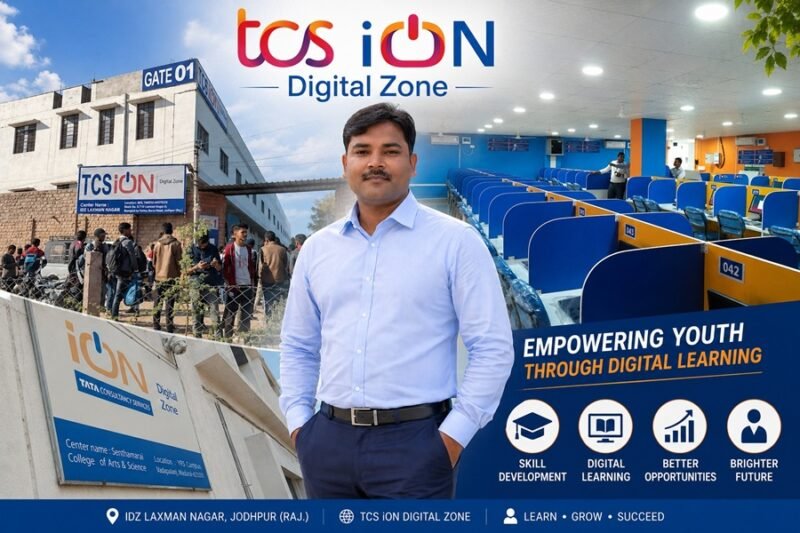
Introduction
Every year, millions of Indian students and job seekers walk into a TCS iON Digital Zone to take some of the most consequential examinations of their lives. Whether it is a government recruitment test, a banking exam, or a university entrance assessment, the TCS iON Digital Zone has become the backbone of computer-based testing in India. Understanding what these centres are, how they work, and what to expect on exam day can make the difference between a nervous first visit and a confident, successful performance.
A TCS iON Digital Zone — also written as iON Digital Zone, IDZ, or TCS iON exam centre — is a purpose-built, technology-enabled assessment facility operated by Tata Consultancy Services under its iON business unit. These zones are geographically distributed across every major state and union territory in India, giving conducting bodies the ability to hold large-scale, tamper-proof, computer-based tests at the same time in thousands of cities and towns.
This comprehensive guide covers everything you need to know: the history of TCS iON, how the digital zones are structured, what examinations they host, the facilities and security infrastructure inside every centre, the rules and documents you must carry, common problems candidates face, and a city-wise directory of prominent locations across India.
Quick Facts at a Glance
| Parameter | Details |
| Full Name | TCS iON Digital Zone (IDZ) |
| Parent Organisation | Tata Consultancy Services (TCS) — iON Business Unit |
| Established | 2010 (iON platform launched) |
| Type | Private computer-based testing infrastructure |
| Number of Centres | 700+ active centres across India (as of 2024) |
| Cities Covered | 300+ cities, tier-1 to tier-3 |
| Primary Use | Government, banking, SSC, railway, university & corporate exams |
| Technology | Proprietary TCS iON online examination platform |
| Annual Candidates | Tens of millions across all conducted exams |
| Accessibility | Ramp access, accessible workstations at most centres |
| Website | www.tcsion.com |
What is TCS iON Digital Zone?
TCS iON is a strategic business unit of Tata Consultancy Services dedicated to providing technology-driven assessment, learning, and life-long employability solutions. The iON in the name stands for Intelligent Online Network, reflecting the platform’s original mission of connecting educational institutions, government bodies, and enterprises through a unified digital infrastructure.
A TCS iON Digital Zone is the physical manifestation of that digital platform — a fully equipped, networked examination hall where candidates can take computer-based tests (CBTs) in a secure, proctored environment. Each zone is fitted with standardised hardware, high-speed internet, biometric verification systems, CCTV surveillance, and trained invigilators who follow strict examination protocols defined by the conducting body.
The term iON Digital Zone IDZ appears frequently in official communications because TCS often labels individual centres with alphanumeric identifiers such as IDZ 1, IDZ 2, IDZ Ramtekdi, and so on. These identifiers help conducting bodies, logistics teams, and candidates distinguish between multiple centres in the same city.
The TCS iON Ecosystem
The TCS iON ecosystem is broader than just physical exam centres. It encompasses:
- TCS iON Assessment Platform: The end-to-end software that delivers question papers, captures responses, handles adaptive testing, and generates results.
- TCS iON Digital Learning: An e-learning platform offering courses, certifications, and skill development programmes for students and working professionals.
- TCS iON Self Service Portal: The candidate-facing web portal where individuals register for exams, download admit cards, check results, and manage their profiles.
- TCS iON Digital Zone Network: The 700+ physical exam centres spread across India that host CBT sessions.
- TCS iON Remote Proctoring: A newer capability allowing candidates to appear from home under AI-driven video surveillance for certain assessments.
Together, these components make TCS iON the largest end-to-end assessment ecosystem in India, trusted by organisations like IBPS, SSC, NTA, state PSCs, and hundreds of private corporations.
History and Evolution of TCS iON Digital Zone
The story of TCS iON begins in 2010 when Tata Consultancy Services identified a massive opportunity in India’s education and assessment sector. Traditional pen-and-paper examinations were plagued by paper leaks, logistical nightmares, and results that took months to publish. TCS iON was conceived as a technology partner that could help institutions digitise their entire examination and learning cycle.
The early years (2010–2013) saw TCS iON focusing primarily on university examinations and corporate assessments. The platform gained significant traction when it partnered with several engineering universities and state technical education boards to conduct semester examinations online, reducing the time from exam to result publication from weeks to days.
The inflection point came in 2014–2016 when major government recruitment bodies began migrating to computer-based testing. The Staff Selection Commission (SSC), Institute of Banking Personnel Selection (IBPS), and Railway Recruitment Boards (RRBs) were under pressure to eliminate paper leaks and accelerate hiring timelines. TCS iON emerged as one of the primary technology and infrastructure partners for these transitions.
Between 2017 and 2020, the TCS iON Digital Zone network expanded aggressively into tier-2 and tier-3 cities. Recognising that millions of candidates from smaller towns faced hardship travelling to metro cities for exams, TCS iON built or partnered with local IT infrastructure providers to establish centres in cities like Nashik, Hubli, Kota, Raipur, and Guwahati.
The COVID-19 pandemic of 2020–2021 temporarily disrupted physical examination activity but accelerated investment in remote proctoring capabilities. Post-pandemic, the network bounced back stronger, with many conducting bodies insisting on higher venue density to reduce crowding. As of 2024, the TCS iON Digital Zone network spans over 700 active centres, making it the single largest computer-based testing infrastructure in India.
How TCS iON Digital Zones Work
Understanding the operational process at a TCS iON Digital Zone helps candidates arrive prepared and reduces anxiety. The process follows a well-defined sequence from registration to result.
Step 1: Registration on TCS iON Self Service Portal
Candidates register through the TCS iON Self Service portal or the conducting body’s official website. During registration, personal details, educational qualifications, and a preferred examination city are captured. The system assigns candidates to an available TCS iON exam centre closest to their preferred city based on seat availability.
Step 2: Admit Card Download
Admit cards are made available on the official portal a few days before the examination. The admit card contains the candidate’s name, roll number, photograph, exam date, shift timing, and most importantly, the full address of the allotted TCS iON Digital Zone. Candidates must download and print the admit card or save it on their smartphone.
Step 3: Reporting at the Centre
Candidates are advised to report at least 30–45 minutes before the scheduled shift start time. Late entry is strictly not permitted after the gate closes, which is typically 15–20 minutes before the exam begins. On arrival, security personnel verify the admit card and a valid photo ID at the gate.
Step 4: Document Verification
Inside the reporting hall, trained staff verify the admit card, photograph, and original photo identification (Aadhaar, PAN, Voter ID, Passport, or Driving Licence). Some examinations also require category certificates or other supporting documents. Any mismatch in details can result in denial of entry.
Step 5: Biometric Verification
This is one of the most important security steps. Candidates’ fingerprints are captured using biometric scanners and matched against the data submitted during online registration. Some centres also conduct iris scanning. Biometric data is used post-examination to detect proxy candidates and impersonation attempts. Failure to match biometrics can lead to disqualification.
Step 6: Frisking and Locker Assignment
All candidates are thoroughly frisked using metal detectors. Mobile phones, smartwatches, Bluetooth devices, and all electronic gadgets must be deposited in the provided lockers or with security. Wallets, keys, and permitted stationery may be retained as per exam rules.
Step 7: Seating and Login
Candidates are escorted to allotted computer terminals. The exam software is pre-loaded and candidates log in using their roll number and date of birth or a one-time password. A brief tutorial on the exam interface is available before the test clock starts.
Step 8: Examination
The examination proceeds on the computer terminal. Candidates navigate between sections and questions using the on-screen interface. A countdown timer is visible throughout. In case of technical issues, a centre invigilator must be notified immediately — the issue is logged, and extra time may be granted depending on the conducting body’s policy.
Step 9: Submission and Exit
At the end of the allotted time, the system automatically locks submissions. Candidates who finish early can submit manually. After submission, candidates collect their belongings from the locker, receive an attendance slip, and exit through a designated route. Rough sheets used during the exam are collected by invigilators.
Types of Exams Conducted at TCS iON Digital Zones
TCS iON Digital Zones host an extraordinarily diverse range of examinations across government, banking, academic, and corporate sectors. Below is a comprehensive overview of the major exam categories.
Government Recruitment Exams
Government recruitment examinations represent the largest share of activity at TCS iON Digital Zones. These include central and state government department recruitment tests conducted by bodies like UPSC (for certain stages), state public service commissions, defence recruitment organisations, and central armed police forces. The scale of these exams — often involving millions of registered candidates — demands the reliable, distributed infrastructure that TCS iON provides.
Banking Sector Exams
The banking sector relies heavily on TCS iON infrastructure for its massive annual recruitment cycles. The Institute of Banking Personnel Selection (IBPS) conducts the IBPS PO, IBPS Clerk, IBPS SO, and IBPS RRB examinations at TCS iON centres nationwide. State Bank of India (SBI) also uses TCS iON infrastructure for SBI PO and SBI Clerk examinations. These exams attract hundreds of thousands of candidates appearing simultaneously across the country.
SSC Examinations
The Staff Selection Commission (SSC) conducts multiple high-stakes examinations including SSC CGL (Combined Graduate Level), SSC CHSL (Combined Higher Secondary Level), SSC GD Constable, SSC MTS, and SSC CPO at TCS iON Digital Zones. Given that SSC exams are multi-tier and span several weeks, TCS iON centres conduct hundreds of examination shifts per recruitment cycle.
Railway Recruitment Exams
Railway Recruitment Boards (RRBs) across India — from RRB Chennai to RRB Allahabad — use TCS iON infrastructure for Computer-Based Tests for vacancies including RRB NTPC, RRB Group D, RRB JE, and RRB ALP. Railway examinations are particularly demanding on infrastructure due to the sheer number of candidates (often exceeding 1 crore registrations per cycle).
Engineering Entrance Exams
Various engineering entrance examinations are conducted at TCS iON centres. While JEE Main uses its own dedicated infrastructure, state-level engineering entrance exams, polytechnic entrance tests, and private university admissions tests frequently leverage TCS iON Digital Zones. Additionally, GATE (Graduate Aptitude Test in Engineering), managed by IITs and IISc, uses TCS iON as a key infrastructure partner for select zones.
MBA and Management Entrance Exams
Several MBA entrance examinations and management aptitude tests are conducted at TCS iON centres. Certain state-level MBA entrance tests, Institute of Company Secretaries of India (ICSI) examinations, and ICAI foundation and intermediate exams utilise TCS iON infrastructure for their computer-based components.
Corporate and Recruitment Assessments
Large private sector employers including IT companies, banks, and manufacturing conglomerates use TCS iON Digital Zones for campus hiring assessments, lateral recruitment tests, and internal promotion examinations. TCS itself uses iON infrastructure for its National Qualifier Test (NQT), which serves as a gateway for fresh engineering graduates seeking employment across multiple companies.
University and Board Examinations
Several universities have adopted computer-based examination delivery for their internal semester examinations, leveraging TCS iON Digital Zones to create a standardised testing environment outside the campus. This is particularly common among deemed universities, private engineering colleges, and institutions under the AICTE framework.
TCS iON Digital Zone Infrastructure
The credibility of TCS iON Digital Zone as an examination venue rests on its robust, standardised infrastructure. Every centre in the network adheres to minimum infrastructure benchmarks defined by TCS iON.
Computer Workstations
Each examination hall is equipped with desktop computers or laptops running the TCS iON secure browser application. The hardware specifications are standardised to ensure uniform exam delivery. Workstations are arranged to prevent line-of-sight copying, with adequate spacing between terminals. Most centres have 50 to 300 workstations depending on the size of the facility.
Internet Connectivity
High-speed dedicated internet connectivity — typically fibre-optic leased lines — is mandatory at every TCS iON Digital Zone. Redundant connections ensure that a single internet service provider failure does not disrupt examination delivery. The TCS iON platform uses encrypted data transmission to protect question integrity.
CCTV Surveillance
Comprehensive closed-circuit television coverage is installed across all areas of the centre, including the examination hall, reporting area, locker zone, and entry/exit points. CCTV footage is recorded and retained for a defined period post-examination to assist in investigations of alleged malpractice. Some examination bodies conduct live monitoring of CCTV feeds from their own control rooms.
Power Backup
Continuous power supply is critical during a computer-based examination. TCS iON Digital Zones are equipped with uninterruptible power supply (UPS) systems and diesel generator backup to ensure zero downtime during power cuts. The UPS provides seamless transition so candidates do not lose their work during a brief power failure.
Security Systems
Physical security at TCS iON Digital Zones includes electronic metal detector frisking at entry points, baggage check systems, biometric capture devices, and manned security personnel throughout the premises. Some centres also deploy jamming devices during certain high-sensitivity examinations to prevent wireless communication.
Accessibility Infrastructure
TCS iON Digital Zones are progressively being made accessible to differently-abled candidates. Many centres feature wheelchair ramps, accessible restrooms, and specially configured workstations. Candidates requiring scribe assistance or additional time due to disability can request these accommodations through the conducting body during the registration process.
Temperature Control and Seating Ergonomics
Air-conditioned examination halls, ergonomic chairs, and adequate lighting are standard provisions. Well-lit, temperature-controlled environments reduce candidate fatigue and create a distraction-free testing experience.
Facilities Available at TCS iON Digital Zones
Beyond the examination hall itself, TCS iON Digital Zones offer a range of candidate support facilities:
- Waiting Area: A dedicated holding area where candidates wait before being called for biometric verification and seating.
- Secure Lockers: Individual lockers or a centralised storage point for mobile phones, bags, and prohibited items. Lockers are provided free of charge at most centres.
- Drinking Water: Potable drinking water is available in the waiting area. Candidates may bring their own transparent water bottles where permitted.
- Restrooms: Separate restrooms for male and female candidates, supervised by invigilators during the examination.
- First Aid: Basic first aid provisions are available. Candidates with known medical conditions should inform the centre staff in advance.
- Help Desk: Centre staff are available to address queries about seating, login credentials, and technical issues.
- Parking: Most TCS iON Digital Zone locations in urban settings offer dedicated parking for two-wheelers and four-wheelers, though space is limited during peak examination days.
TCS iON Digital Zone Rules and Guidelines
Strict adherence to examination rules is non-negotiable at TCS iON Digital Zones. Violations can result in cancellation of candidature and potential debarment from future examinations.
General Conduct Rules
- Candidates must follow all instructions issued by centre staff and invigilators without argument.
- Impersonation or sending a proxy candidate is a criminal offence under the relevant examination laws.
- Unfair means, including possession of cheat sheets, WhatsApp communication, or signalling, will result in immediate disqualification.
- Candidates must not leave their seats during the exam without permission.
- Rough work must be done only on the physical or digital rough sheet provided by the centre.
- Taking photographs or screenshots of question papers is strictly prohibited and legally actionable.
Prohibited Activities
- Using or attempting to use any electronic communication device inside the examination hall.
- Tampering with computer hardware, software, or network settings.
- Discussing examination content with other candidates during or after the exam.
- Creating disturbances that affect other candidates’ performance.
What to Carry on Exam Day
| Item | Notes |
| Admit Card (Printed/Digital) | Mandatory — carry original printout or clear digital copy |
| Photo ID Proof | Aadhaar, PAN, Voter ID, Passport, or Driving Licence (original) |
| Passport-size Photographs | 2 copies (some exams require pasting on attendance sheet) |
| Category Certificate | If applicable — SC/ST/OBC/EWS/PwD |
| Pen (Blue/Black Ballpoint) | For signing attendance register |
| Transparent Water Bottle | Where permitted by the exam rules |
| Prescribed Medicines | In original packaging with doctor’s prescription if required |
What Not to Carry
| Prohibited Item | Reason |
| Mobile Phones & Smartwatches | Potential for communication of questions/answers |
| Bluetooth Devices & Earphones | Wireless communication risk |
| Wallets & Loose Cash | Security precaution (keep minimal cash) |
| Study Materials & Books | Unfair advantage |
| Digital Watches with Memory | May store formulae |
| Handbags & Backpacks | Must be deposited at locker |
| Food Items (except permitted) | Not allowed inside exam hall |
| Electronic Stationery | Calculators, PDAs unless explicitly permitted |
Common Issues Faced by Candidates
Despite TCS iON’s robust infrastructure, candidates occasionally encounter challenges. Being aware of these can help you respond calmly.
- Biometric Mismatch: Calluses, cuts, or dry skin can cause fingerprint scanner failures. Apply moisturiser the night before and ensure your fingers are clean and dry on exam day. If a mismatch persists, insist on manual verification supervised by the centre superintendent.
- Admit Card Address Mismatch: Some candidates find that the address printed on the admit card differs from what Google Maps shows. Always verify the venue at least a day before using the official portal and cross-check with the centre’s landmark photographs.
- Computer Terminal Issues: If your screen freezes, keyboard malfunctions, or the browser crashes, raise your hand immediately. Do not attempt to fix it yourself. The invigilator will escalate to a technical team, and the lost time is typically compensated.
- Wrong Shift Reporting: Some candidates misread AM/PM on their admit cards and report for the wrong shift. Double-check your admit card the night before.
- Long Queues at Reporting: Arrive at least 45 minutes early on heavily loaded exam days. Biometric queues can be slow when hundreds of candidates arrive at the same time.
- Network Interruption: Though rare, internet disruptions can cause a brief pause. Do not panic. The TCS iON platform typically has local caching so responses are not lost.
Tips for First-Time Candidates
- Visit the centre address at least one day before the exam to avoid getting lost on exam day.
- Download and verify your admit card from the official portal — not from unofficial Telegram groups.
- Sleep well the night before and avoid last-minute cramming on exam morning.
- Carry two sets of printed admit cards in case one is misplaced.
- Reach the centre 45 minutes before the shift to comfortably complete document verification and biometrics.
- Familiarise yourself with the TCS iON exam interface using the official mock test link, if available.
- Read all on-screen instructions before clicking ‘Start Exam’ — there is usually a 5-minute tutorial.
- Manage your time visually using the question palette on screen — mark uncertain questions for review.
- Submit only when you are certain — verify your responses on the review screen before final submission.
- Collect your locker key / belongings before leaving the premises.
Benefits of Computer-Based Testing
The shift from traditional pen-and-paper exams to computer-based testing at TCS iON Digital Zones has delivered measurable improvements across the examination ecosystem:
- Elimination of Paper Leaks: Digital question delivery with encrypted transmission dramatically reduces the risk of paper leaks that plagued offline exams.
- Faster Results: Results are generated algorithmically within days or even hours of exam completion, compared to weeks for manual evaluation.
- Standardised Testing Conditions: Every candidate faces the same hardware, software, and environmental conditions, reducing variability.
- Greater Transparency: Digital logs of every candidate action create an audit trail that facilitates grievance redressal.
- Geographic Accessibility: 700+ centres across India mean candidates in tier-3 cities no longer need to travel to metros for exams.
- Reduced Carbon Footprint: Elimination of millions of printed question booklets per exam cycle represents a significant environmental benefit.
- Adaptive Testing Capability: Computer-based platforms enable adaptive item delivery, where question difficulty adjusts to candidate performance in real time.
TCS iON Digital Learning Ecosystem
Beyond physical examination infrastructure, TCS iON has built a comprehensive digital learning ecosystem that serves students, job seekers, and working professionals.
TCS iON Digital Learning Hub
The TCS iON Digital Learning platform offers curated online courses in domains including information technology, business analytics, digital marketing, financial accounting, and soft skills. Learners can enrol through the iON portal, complete modules at their own pace, and earn TCS iON-certified digital credentials upon successful completion.
TCS iON Assessments and Certifications
The TCS iON National Qualifier Test (NQT) is one of the most widely recognised employability assessments in India. It measures cognitive ability, programming logic, and domain knowledge, providing a standardised score that hundreds of employers accept for campus hiring decisions. Students appearing for NQT receive a detailed performance report that serves as a credential in job applications.
Skill Development Programmes
In partnership with government skilling initiatives such as Skill India, TCS iON has delivered training and assessment at scale for vocational skills. These programmes target youth in tier-2 and tier-3 cities, equipping them with employable skills certified by industry-recognised bodies.
Campus Connect and University Partnerships
TCS iON’s Campus Connect programme partners with colleges and universities to offer placement readiness training, aptitude workshops, and mock assessments. Students gain access to TCS iON’s digital learning content and practice platforms, improving their competitiveness in campus recruitment.
Popular TCS iON Digital Zone Locations in India
TCS iON Digital Zones are present in virtually every major city in India. Below are detailed overviews of four key centres, each of which has its own dedicated location guide.
TCS iON Digital Zone Noida Sector 62
Located in the heart of Noida’s IT corridor, the TCS iON Digital Zone in Sector 62 is one of the most active examination centres in the Delhi NCR region. It serves candidates appearing for SSC, IBPS, RRB, and corporate recruitment assessments. Sector 62 is well-connected by the Delhi Metro’s Blue Line, making it accessible for candidates from Delhi, Ghaziabad, and Greater Noida.
For complete address, photographs, directions, nearby landmarks, and candidate tips, visit the dedicated page: TCS iON Digital Zone Noida Sector 62.
TCS iON Digital Zone IDZ2 Mathura Road
The TCS iON Digital Zone IDZ2 on Mathura Road in Delhi/Faridabad is a large-capacity assessment centre catering to candidates from South Delhi, Faridabad, and the surrounding areas. Its location on one of Delhi’s primary arterial roads ensures excellent connectivity via DTC bus routes and metro. This centre regularly hosts IBPS, SSC, and government department examinations.
Find complete details about directions, parking, infrastructure, and exam day tips at: TCS iON Digital Zone IDZ2 Mathura Road.
TCS iON Digital Zone IDZ Ramtekdi 2
Situated in the Ramtekdi area of Hadapsar, Pune, the TCS iON Digital Zone IDZ Ramtekdi 2 serves candidates from across Pune and the surrounding Pune Metropolitan Region. This centre is particularly busy during Maharashtra state government recruitment cycles and IBPS examinations. Hadapsar is located in the eastern part of Pune with good connectivity from Swargate, Kondhwa, and Wanowrie.
For detailed directions, photos, and candidate preparation tips, visit: TCS iON Digital Zone IDZ Ramtekdi 2.
TCS iON Digital Zone IDZ 2 Moula Ali
The TCS iON Digital Zone IDZ 2 in Moula Ali, Hyderabad, is a key assessment centre for candidates from the Telangana capital and neighbouring districts. Located in the east of Hyderabad near Uppal and LB Nagar Metro stations, this centre hosts Telangana state recruitment examinations, IBPS, SSC, and private sector assessments. Its proximity to major TSRTC bus routes makes it accessible for candidates from Warangal, Nalgonda, and Rangareddy districts.
Complete location guide, photographs, and exam day advice available at: TCS iON Digital Zone IDZ 2 Moula Ali.
State-wise List of Popular TCS iON Digital Zones
The following table lists prominent TCS iON Digital Zone locations across major states and union territories in India. This is not an exhaustive list — the official TCS iON portal and your admit card are the authoritative sources for your specific allotted centre.
| State / Region | Key Cities with IDZ Centres | Commonly Hosted Exams |
| Delhi NCR | New Delhi, Noida (Sector 62), Faridabad (Mathura Road), Gurugram, Ghaziabad | IBPS, SSC CGL, SSC CHSL, RRB NTPC, UPSC CBT |
| Maharashtra | Mumbai, Pune (Hadapsar/Ramtekdi), Nagpur, Nashik, Aurangabad | IBPS, SSC, MH State PSC, RRB, GATE |
| Telangana | Hyderabad (Moula Ali, Uppal, Kukatpally), Warangal, Nizamabad | TSPSC, IBPS, SSC, RRB, TCS NQT |
| Tamil Nadu | Chennai, Coimbatore, Madurai, Salem, Tiruchirappalli | TNPSC, IBPS, SSC, RRB Group D, GATE |
| Karnataka | Bengaluru (Whitefield, Electronic City), Mysuru, Hubli, Mangaluru | KPSC, IBPS, SSC, RRB, Infosys/TCS NQT |
| Kerala | Thiruvananthapuram, Kochi, Kozhikode, Thrissur, Kollam | Kerala PSC CBT, IBPS, SSC, RRB |
| Punjab | Chandigarh, Amritsar, Ludhiana, Jalandhar, Patiala | PPSC, IBPS, SSC, RRB, TCS NQT |
| Madhya Pradesh | Bhopal, Indore, Jabalpur, Gwalior, Ujjain | MPPSC CBT, IBPS, SSC, RRB Group D |
| Uttar Pradesh | Lucknow, Kanpur, Agra, Varanasi, Prayagraj, Noida, Meerut | UPPSC CBT, IBPS, SSC, RRB, NQT |
AEO: Direct Answer Section
The following direct answers are optimised for AI Overviews, voice search, and featured snippet placement.
What is TCS iON Digital Zone?
TCS iON Digital Zone is a computer-based testing centre operated by Tata Consultancy Services’ iON business unit. These centres provide secure, technology-enabled examination halls equipped with networked workstations, biometric verification, CCTV surveillance, and power backup for conducting government, banking, and corporate exams across India.
Which exams are conducted at TCS iON Digital Zone?
TCS iON Digital Zones host a wide range of examinations including IBPS PO, IBPS Clerk, SBI PO, SSC CGL, SSC CHSL, RRB NTPC, RRB Group D, GATE, state PSC exams, university entrance tests, and corporate recruitment assessments like TCS NQT.
Is TCS iON Digital Zone a government organisation?
No. TCS iON Digital Zone is a commercial service operated by Tata Consultancy Services (TCS), a private sector IT company. However, it is an empanelled technology partner for numerous central and state government examination-conducting bodies.
What facilities are available at TCS iON Digital Zone?
TCS iON Digital Zones typically offer air-conditioned exam halls, secure lockers for personal items, biometric verification systems, CCTV surveillance, waiting areas, drinking water, restrooms, parking, and first aid provisions.
How do I find my TCS iON Digital Zone location?
Your allotted TCS iON Digital Zone address is printed on your admit card. You can also log in to the official exam portal or TCS iON Self Service portal to view and download your admit card. Always verify the location on Google Maps at least a day before the exam.
Frequently Asked Questions
1. What is TCS iON Digital Zone?
TCS iON Digital Zone is a dedicated computer-based test centre operated by the iON unit of Tata Consultancy Services. These secure facilities provide networked computers, biometric verification, CCTV monitoring, and professional invigilators for conducting a wide range of examinations.
2. Is TCS iON Digital Zone safe for candidates?
Yes. TCS iON Digital Zones are among the most secure examination environments in India. They feature biometric identity verification, metal detector frisking, CCTV surveillance, and strict no-mobile-phone policies to ensure a fair and secure testing environment.
3. Which government exams are conducted at TCS iON Digital Zone?
Major government examinations conducted at TCS iON Digital Zones include SSC CGL, SSC CHSL, SSC GD, IBPS PO, IBPS Clerk, SBI PO, RRB NTPC, RRB Group D, RRB JE, and various state PSC examinations.
4. Is parking available at TCS iON Digital Zone?
Most TCS iON Digital Zone locations provide limited parking facilities for two-wheelers and four-wheelers. However, parking space can be constrained during peak examination days. Candidates are encouraged to use public transport or arrive early to secure a parking spot.
5. How early should candidates arrive at TCS iON Digital Zone?
Candidates should report to the centre at least 30 to 45 minutes before their scheduled shift time. Gates are typically closed 15 to 20 minutes before the exam begins, and latecomers are not permitted entry under any circumstances.
6. Can candidates carry mobile phones to TCS iON Digital Zone?
Mobile phones are strictly prohibited inside the examination hall. They must be deposited in the locker provided at the centre before entering the examination area. Smart devices of any kind — including smartwatches — are not permitted.
7. Are lockers available at TCS iON Digital Zone?
Yes, most TCS iON Digital Zones provide individual or shared lockers for storing personal electronic devices and bags. Locker facilities are generally provided free of charge. Candidates should carry a small lock if they wish to secure their locker independently.
8. How does biometric verification work at TCS iON Digital Zone?
During the examination check-in process, candidates place their finger(s) on a biometric scanner. The captured fingerprint is matched against the biometric data provided during online registration. Successful matching confirms the candidate’s identity before they are permitted to enter the examination hall.
9. What is TCS iON Digital Learning?
TCS iON Digital Learning is an online education platform offering courses, assessments, and certifications in technology, business, and employability skills. It is distinct from the Digital Zone exam infrastructure but is part of the broader TCS iON ecosystem.
10. What is the TCS iON Self Service portal?
The TCS iON Self Service portal is the online platform where candidates register for TCS iON-managed examinations, download admit cards, check results, and manage their profile. It is accessible at www.tcsion.com.
11. What is TCS iON NQT?
TCS iON NQT (National Qualifier Test) is an industry-recognised employability assessment for fresh graduates. Hundreds of companies accept the NQT score as a valid benchmark for campus hiring. It tests cognitive ability, verbal reasoning, programming logic, and domain knowledge.
12. Can I choose my TCS iON Digital Zone location?
You can indicate your preferred examination city during registration. The final centre allotment, however, is decided by the conducting body based on seat availability, and the address is communicated through your admit card.
13. What documents do I need to carry to TCS iON Digital Zone?
You must carry a valid printed or digital admit card and a government-issued photo ID such as Aadhaar, PAN, Passport, Voter ID, or Driving Licence. Category certificates, disability certificates, or other supporting documents may be required depending on the specific examination.
14. What happens if a computer malfunctions during my exam?
If a technical issue occurs during the exam, notify the invigilator immediately. The incident is logged, and the centre’s technical team will attempt to resolve it. Depending on the conducting body’s policy, additional time may be granted to compensate for the disruption.
15. Is TCS iON Digital Zone accessible for differently-abled candidates?
TCS iON Digital Zones are progressively implementing accessibility features including wheelchair ramps, accessible restrooms, and adapted workstations. Candidates requiring specific accommodations should declare their disability status during registration and contact the conducting body for scribe or extra time requests.
16. How many TCS iON Digital Zones are there in India?
As of 2024, there are more than 700 active TCS iON Digital Zone centres spread across 300+ cities in India, from metropolitan cities to tier-3 towns.
17. What is the difference between TCS iON Digital Zone IDZ1 and IDZ2?
IDZ1 and IDZ2 are simply sequential identifiers used to distinguish between multiple TCS iON Digital Zone centres in the same city. They indicate different physical locations, not different quality or infrastructure standards.
18. How do I find the TCS iON Digital Zone near me?
The most reliable way is to check your exam admit card for the allotted centre address. Alternatively, you can search for ‘TCS iON Digital Zone [your city]’ on Google Maps, or search our location-specific guides on this website for detailed directions and photographs.
19. What time do TCS iON Digital Zones open?
Operating hours vary by examination schedule. On exam days, centres typically open 60 to 90 minutes before the first shift begins. The reporting cut-off is usually 15 to 20 minutes before the shift starts.
20. Can I reschedule my TCS iON Digital Zone centre?
Rescheduling of exam centres after confirmation is subject to the conducting body’s policy. Most government examinations do not permit post-allotment centre changes. For corporate assessments, some flexibility may be available — check the official portal.
21. Is food allowed inside TCS iON Digital Zone?
Food and beverages are generally not permitted inside the examination hall. A transparent water bottle may be allowed at some centres. Candidates with medical conditions requiring food should contact the conducting body before exam day.
22. Are CCTV recordings used for evaluation purposes?
CCTV footage is primarily used for security monitoring and malpractice investigation. In case of a dispute regarding examination conduct, the recordings serve as evidence. They are not used to evaluate candidate performance.
23. What is the TCS iON Assessment Centre?
TCS iON Assessment Centre is another term used for TCS iON Digital Zone, particularly in corporate recruitment contexts. It refers to the same physical exam facility infrastructure used for skill-based and cognitive assessments for private sector hiring.
24. Does TCS iON conduct online exams from home?
Yes, TCS iON offers remote proctoring solutions where candidates can appear for certain examinations from their own computers at home, monitored via webcam and AI-driven proctoring software. This option is not universal and depends on the conducting body’s decision.
25. How do I contact TCS iON customer support?
Candidates can reach TCS iON support through the official helpline numbers and email IDs published on the TCS iON official website (www.tcsion.com) or on their admit cards. For exam-specific issues, the conducting body’s helpline should be the first point of contact.
Conclusion
The TCS iON Digital Zone network stands as one of modern India’s most impressive technological achievements in the education and public sector domain. From its origins as a niche digital assessment solution in 2010 to its current status as the backbone of computer-based testing for millions of aspirants every year, the journey of TCS iON reflects the broader digital transformation of India’s examination ecosystem.
For students preparing for government jobs, banking positions, railway recruitment, or engineering entrance exams, the TCS iON Digital Zone is more than just a venue — it is the gateway to life-changing opportunities. Understanding how these centres operate, what to expect on exam day, and how to navigate common challenges empowers candidates to perform at their best in what are often high-stakes, once-in-a-year opportunities.
This guide has walked you through every dimension of the TCS iON Digital Zone experience: the history and ecosystem, the end-to-end examination process, the infrastructure and facilities that make secure testing possible, the documents and rules that govern each exam day, and a comprehensive directory of centre locations across India’s major states. We have also provided direct answers optimised for search and AI overview systems so you can quickly find what you are looking for.
As the TCS iON network continues to expand into more cities and incorporate innovations like AI-based remote proctoring, adaptive assessments, and integrated skilling programmes, it will remain central to India’s ambition of creating a merit-based, technology-driven employment and education landscape.
Whether you are visiting a TCS iON Digital Zone for the very first time or are a seasoned exam-taker heading to a new centre in an unfamiliar city, we hope this guide has given you the confidence and knowledge to walk in prepared. Bookmark this page, explore the individual centre guides linked above, and best of luck in your examinations.
