


There’s nothing quite like the softness of a newborn’s skin. But that softness comes with fragility—and as a new parent, knowing how to protect it can feel overwhelming. Baby skin care isn’t just about choosing the right lotion. It’s about understanding what your baby’s skin actually needs and why it’s so different from your own.
A newborn’s skin is still developing. It’s thinner, more porous, and far more sensitive to the environment than adult skin. This means everyday things—a harsh soap, cold air, or even a rough fabric—can quickly lead to dryness, redness, or irritation. The good news? With a few simple habits and the right products, keeping your baby’s skin healthy is completely manageable.
This guide covers everything you need to know: daily routines, winter skin care, natural vs. commercial products, common skin issues, and a helpful breakdown of what to look for (and avoid) in baby skin care products available in India.
Why Newborn Baby Skin Needs Special Care
A baby’s skin is approximately 20–30% thinner than adult skin. Because of this, it loses moisture much faster and absorbs substances—both good and harmful—more readily. The skin barrier, which acts as the body’s first line of defense, is still maturing during the first few months of life.
This is why the products and routines you choose really matter. Adult skin care products—even “gentle” ones—often contain fragrances, preservatives, and pH levels that are completely unsuitable for newborns. Baby skin also has a higher surface-area-to-body-weight ratio, meaning any chemical absorbed through the skin has a proportionally greater effect.
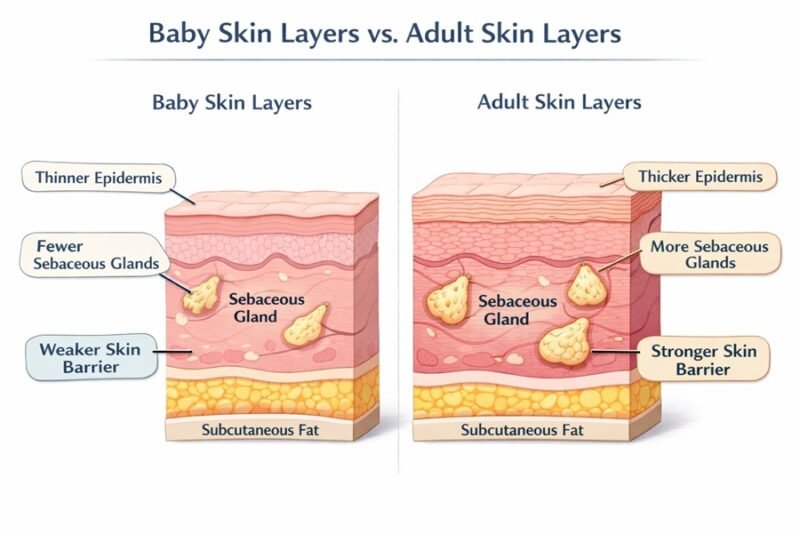
The bottom line: baby skin deserves its own dedicated care routine—gentle, minimal, and free from unnecessary chemicals.
Step-by-Step Daily Baby Skin Care Routine
Consistency is key. A simple daily routine—bathing, moisturizing, and diaper care—goes a long way in keeping your newborn comfortable and healthy.
Bathing
Newborns don’t need a bath every day. Two to three times a week is plenty for the first few months. Over-bathing can strip the skin of its natural oils, leading to dryness and irritation.
Here’s what to keep in mind:
- Water temperature: Aim for lukewarm water—around 37–38°C (98–100°F). Always test with your elbow or wrist, not your hand.
- Duration: Keep baths short—5 to 10 minutes maximum.
- Cleanser: Use a mild, soap-free, fragrance-free baby wash with a pH close to 5.5 (which matches a baby’s skin pH). Avoid anything with sulfates or alcohol.
- Technique: Use gentle, circular motions with a soft cloth. Never scrub.
- After bathing: Pat the skin dry—don’t rub. Pay special attention to skin folds around the neck, armpits, and thighs, where moisture tends to collect.
Moisturizing
Apply a gentle baby skin cream or lotion within 3–5 minutes of bathing, while the skin is still slightly damp. This helps lock in moisture before it evaporates.
Look for moisturizers containing:
- Shea butter – deeply nourishing and non-irritating
- Coconut oil – has natural antimicrobial properties
- Aloe vera – soothing and cooling for sensitive skin
- Ceramides – help strengthen the skin barrier
Avoid products with artificial fragrance, dyes, or parabens—these are common triggers for baby eczema and contact dermatitis.
Always do a patch test before trying a new product on your baby. Apply a small amount to the inner wrist or behind the ear and wait 24 hours. If there’s no redness or reaction, the product is likely safe to use.
Diaper Area Care
The diaper area is constantly exposed to moisture, friction, and irritants from urine and stool—making it one of the most vulnerable areas of a baby’s skin.
To prevent diaper rash:
- Change diapers frequently, ideally every 2–3 hours or immediately after soiling.
- Clean the area with fragrance-free, alcohol-free baby wipes or plain warm water and a soft cloth.
- Allow the skin to air-dry for a minute before putting on a fresh diaper.
- Apply a zinc oxide-based barrier cream at every change to protect against moisture and friction.
- If a rash appears and doesn’t improve within 3 days, consult a pediatrician—it may be a fungal infection requiring treatment.
How to Care for Baby Skin in Winter
Cold weather brings a specific set of challenges for newborn skin. Low humidity, dry indoor heating, and cold winds all accelerate moisture loss, leaving baby skin prone to chapping and flaking.
Here’s how to protect your baby’s skin during the colder months:
- Moisturize more frequently: Switch from a light lotion to a richer cream or ointment during winter. Apply at least twice a day.
- Use a humidifier: Place a cool-mist humidifier in your baby’s room to maintain indoor humidity between 40–60%. This reduces transepidermal water loss significantly.
- Warm, not hot baths: Hot water feels tempting in winter, but it strips natural oils faster. Stick to lukewarm.
- Cover exposed skin outdoors: Use soft mittens, socks, and hats. Avoid wool directly against the skin—it can be scratchy and irritating. Opt for cotton or bamboo layers instead.
- Avoid over-bundling: Excess layers can cause sweating, which paradoxically leads to skin irritation.
- Lip and cheek care: Apply a thin layer of fragrance-free petroleum jelly or baby balm to chapped cheeks and lips before heading outside.
Best Baby Skin Care Product Brands in India: What to Look For
Rather than recommending specific brands (formulations can vary by region and change over time), here’s a practical comparison table to help you choose wisely at the store:
| Category | Key Ingredients to Look For | What to Avoid |
| Baby Soap / Wash | Coconut-derived cleansers, glycerin, oat extract | SLS/SLES (sulfates), artificial fragrance, alcohol |
| Baby Lotion | Shea butter, aloe vera, glycerin, sunflower oil | Parabens, mineral oil, synthetic dyes |
| Baby Skin Cream | Ceramides, zinc oxide, beeswax, cocoa butter | Steroids (unless prescribed), fragrances, preservatives |
| Baby Oil | Cold-pressed coconut oil, almond oil, sesame oil | Mineral oil, petroleum derivatives, added fragrance |
| Diaper Rash Cream | Zinc oxide (10–40%), beeswax, calendula | Boric acid, camphor, phenol, synthetic preservatives |
Popular Indian brands to explore include Mamaearth, The Moms Co., Himalaya Baby, Sebamed Baby, and Johnson’s Cottontouch (reformulated range). Always check the ingredient list—brand reputation alone isn’t enough.
Natural vs. Commercial Baby Products: What’s the Real Difference?
The growing interest in natural baby products in India reflects a broader truth: parents want fewer ingredients, not more. And often, they’re right to want that.
Cold-pressed oils—like coconut, sesame, and almond oil—have been used in traditional Indian baby massage (malish) for generations. Research supports their use: virgin coconut oil, for example, has been shown to improve the skin barrier and reduce the risk of atopic dermatitis in high-risk newborns.
That said, “natural” doesn’t automatically mean safe. Some natural ingredients—like essential oils, citrus extracts, and certain herbal compounds—can be highly irritating or even allergenic for newborns. Always check, regardless of how natural a product claims to be.
Commercial products, when properly formulated and dermatologically tested, can be just as safe and effective—sometimes more so, because they’ve undergone clinical testing. Look for labels that say “dermatologically tested,” “hypoallergenic,” and “free from parabens and sulfates.”
The best approach? A blend of both. Use simple, cold-pressed oils for massage, and choose well-formulated commercial products for cleansing and targeted moisturizing.
Common Baby Skin Issues and How to Handle Them
Even with the best care routine, skin issues can arise. Here’s a quick guide to the most common ones:
Diaper Rash
Red, irritated skin in the diaper area. Usually caused by prolonged wetness or friction. Treat with frequent changes, air drying, and a zinc oxide barrier cream. If it persists beyond 3 days or spreads, see a doctor.
Cradle Cap (Seborrheic Dermatitis)
Yellowish, flaky, crusty patches on the scalp. It looks alarming but is harmless and very common in the first few weeks. Gently massage a small amount of coconut or olive oil into the scalp, leave for 15 minutes, then brush with a soft baby brush before washing. Do not pick at the flakes.
Heat Rash (Prickly Heat)
Tiny red bumps, usually on the neck, chest, or in skin folds. Caused by blocked sweat glands due to over-bundling or humid weather. Keep the area cool, dry, and exposed to air. Avoid thick creams on affected areas, as these can worsen blockage.
Newborn Acne
Small pimples on the face, appearing in the first 2–4 weeks. These are caused by maternal hormones and usually resolve on their own within a few weeks. No treatment is needed—just gentle cleansing with water.
Eczema (Atopic Dermatitis)
Dry, itchy, inflamed patches that may weep or crust. Common in babies with a family history of allergies or asthma. Requires consistent moisturizing and, in moderate-to-severe cases, prescribed treatment. Consult a pediatric dermatologist.
The Bond Behind Every Drop of Baby Lotion
Baby skin care is ultimately an act of love. Every gentle stroke during bath time, every careful application of cream, every soft pat with a towel—these moments aren’t just about hygiene. They’re about connection.
Touch is one of the most powerful ways a newborn learns they are safe and loved. The routine of caring for your baby’s skin is an opportunity to slow down, tune in, and be present. And when you choose products that are gentle and safe, you’re not just protecting the skin—you’re building trust.
Keep your routine simple, stay consistent, and always prioritize what’s gentle over what’s glamorous. Your baby doesn’t need ten products. They need your warmth, your attention, and a clean, moisturized, protected skin barrier to explore the world in comfort.
Frequently Asked Questions
How do you take care of a baby’s dry skin?
Dry skin in babies is usually caused by low humidity, over-bathing, or harsh products. To manage it: reduce bath frequency to 2–3 times a week, use lukewarm (not hot) water, apply a fragrance-free, ceramide-rich moisturizer immediately after bathing while the skin is still damp, and use a humidifier in the baby’s room. If dryness is severe or accompanied by redness and itching, consult a pediatrician to rule out eczema.
Which is the best baby products brand for newborns in India?
There’s no single “best” brand—it depends on your baby’s skin type and sensitivities. Popular dermatologist-recommended options in India include Sebamed Baby (known for its pH 5.5 formulation), The Moms Co. (natural, toxin-free range), and Mamaearth (plant-based, BPA-free). Always read the ingredient list carefully and do a patch test before full use.
How often should I bathe my newborn?
For the first few months, 2–3 baths per week is ideal. Daily bathing is unnecessary and can disrupt the skin’s natural oil balance. Between baths, clean the face, neck folds, diaper area, and hands with a damp, soft cloth as needed.
Is baby massage with oil good for newborns?
Yes—gentle massage with a safe oil like cold-pressed coconut or almond oil supports bonding, improves circulation, and helps maintain the skin barrier. Avoid essential oils (like eucalyptus or lavender) on young babies, as these can be too strong for sensitive skin.
Can I use adult moisturizer on my baby?
No. Adult moisturizers often contain fragrances, alpha hydroxy acids, retinoids, or preservatives that are not safe for a baby’s thin, permeable skin. Always use products specifically formulated and tested for newborns.
Read Also: Hopie Carlson: Everything You Need to Know
